Arundhati Roy Quotes
The World Trade Organization, The World Bank, The International Monetary Fund and other financial institutions virtually write economic policy and parliamentary legislation. With a deadly combination of arrogance and ruthlessness, they take their sledgehammers to fragile, interdependent, historically complex societies and devastate them, all under the fluttering banner of 'reform'.
Roy, Arundhati. Power Politics. South End Press, 2001.


These loans come from either the World Bank or the International Monetary Fund, both of which are headquartered in Washington. Usually, financially distressed countries participating in such a program have to agree to a series of economic reforms which the government of the country would not make if the pressure were not there. Therefore some like Goldsmith argue that there is a loss of sovereignty.


The “Harvard Boys” referred to some free market economics professors who were advising the Russian government on their transition to a democratic industrial democracy. Free market capitalism was a great failure in that instance. However the free market enthusiasts would argue that Russia did not have a legal system, and organized crime was not controlled, and the Russian people where just not used to a free market.
Criticism of the World Bank and the IMF was not limited to the turn of the century fights over development and globalization. The difficulty for the word financial institutions was and is that they believe that they have to work with whatever government is in power regardless of the legitimacy of that government or what kinds of anti-democratic methods they used to come to power and hold it. In this particular case, democracy had been displaced and right wing death squads were operating with impunity. For many, the World Bank and IMF are equally guilty for helping to prop these governments up and ignoring the gross Human Rights Violation which they failed to condemn.

The Organization for Economic Cooperation and Development (OECD) had proposed International Development Goal Benchmarks for donor organizations which was then officially endorsed by the World Bank, the IMF and the UN. But many people thought that many of these “benchmarks” were not only invalid but exacerbated some of the problems that they were trying to fix—especially in a developing country where structural factors inhibited class mobility and the focus was on large businesses and not small and “mom & pop” enterprises that poor could aspire to and benefit from.


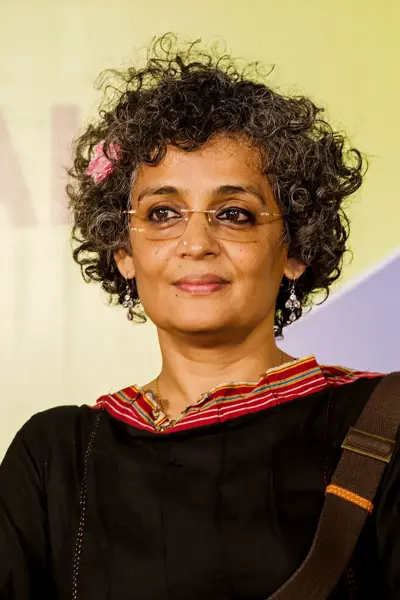
Suzanna Arundhati Roy is an Indian author best known for her novel The God of Small Things (1997), which won the Man Booker Prize for Fiction in 1997 and became the best-selling book by a non-expatriate Indian author. She is also a political activist involved in human rights and environmental causes.
