Rudolph Rocker Quotes
The will to power which always emanates from individuals or from small minorities in society is in fact a most important driving force in history. The extent of its influence has up to now been regarded far too little, although it has frequently been the determining factor in the shaping of the whole of economic and social life.
Rocker, Rudolf. Nationalism and Culture. Translated by Ray E. Chase, Covici Friede, 1937, p. 32.


He was representing the Muslims of India. These are the descendants of the millions of Muslims who preferred to remain in majority Hindu India rather than join the new Islamic state of Pakistan. There are almost as many Muslims today in India as there are Muslims in Pakistan and more than there are in the Arab countries. However, unlike Pakistan, India is a democracy. However, the Indian Islamic leaders question whether or not they can turn the Islamic vision into a lasting Islamic culture without the force and power of the state. Only Turkey amongst the Islamic countries has been able to maintain an Islamic culture without using the political and legal force of the state to do it. But many Islamic orthodox thinkers believe that the Islamic culture in Turkey has been weakening over the years. Essentially, their concept of a permanent and stable Islamic culture requires the force of the state as that has been the historical experience. So there is constant pressure on the Indian government to pass laws that (for Muslims) enforce or require certain aspects of Islam, like parts of Sharia law while most Indian politicians are committed to maintaining a democracy with a separation of church and state.


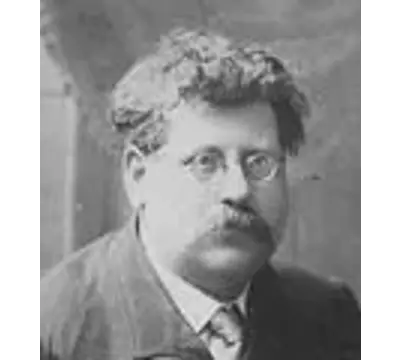
Johann Rudolf Rocker was a German anarchist writer and activist. Though often described as an anarcho-syndicalist, he was a self-professed anarchist without adjectives, believing that anarchist schools of thought represented "only different methods of economy" and that the first objective for anarchists was "to secure the personal and social freedom of men".
