Harry Bridges Quotes
The weapon of political action. That is going to be the main fighting weapon of all labor, international as well as national, if we are going to do those things that we are in business to do as a labor union
Harry Bridges, 1901-1990, Founder and President, International Longshoreman & Warehouse Union (ILWU), West Coast Director, Congress for Industrial Organizations (CIO), Labor Power—The True Power of This Country, ILWU 142 Hawaii
Sourced by: Eigen's Political and Historical Quotations


Vladimir Lenin


The notion that President Theodore Roosevelt could be terrorized was absurd on its face. He faced down everyone; one of the reasons he was so popular. But Van Cleave and his organization was paranoid about organized labor. It is they who were terrorized. Van Cleave was rabidly opposed to any anti-trust government “interference” with business and he was also virulently opposed to labor unions. See {638612}, {638615}, {638614}, and {638613}.

The unions that broke off were very successful at increasing union membership and made large efforts at organizing. The others were losing members for the most part and devoted most of their resources to politics to protect what they had.


Roosevelt shocked the conservative members of his own party with this statement. Labor unions were not then an accepted concept in American society. Anti trust legislation and enforcement was in its infancy and companies in an industry commonly conspired as to price fixing, labor negotiations and market share allocations. TR had a scrupulous sense of fairness and equity.


This opinion was written very early in his career when he was an Ohio Judge in Cincinnati.


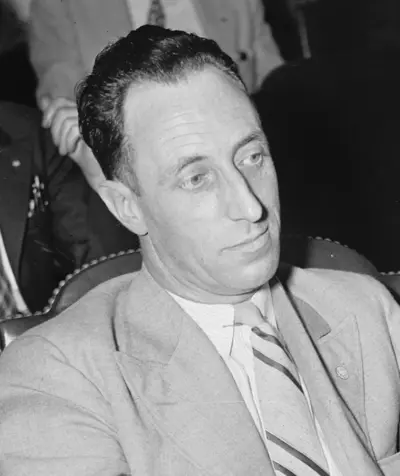
Harry Bridges was an Australian-born American union leader, first with the International Longshoremen's Association (ILA). In 1937, he led several chapters in forming a new union, the International Longshore and Warehouse Union (ILWU), expanding members to workers in warehouses, and led it for the next 40 years. He was prosecuted for his labor organizing and believed subversive status by the U.S. government during the 1930s, 1940s, and 1950s, with the goal of deportation. This was never achieved.
