Richard Wagner Quotes
The victories which the Poles obtained for a short period during May 1831 aroused my enthusiastic admiration: it seemed to me as though the world has, by some miracle, been created anew.
The Poles had revolted against Russian rule but despite initial victories, the revolution was unsuccessful. The Poles however had the sympathies of most of the literati throughout Europe.
Richard Wagner, 1813-1883, German Composer, Autobiography, My Life, Quoted by Adam Zamoyski in Holy Madness: Romantics, Patriots, and Revolutionaries, 1776-1781
Sourced by: Eigen's Political and Historical Quotations

The song was adopted as the Polish national anthem in 1927. At the battle of Macieowice, the great Polish hero, Thaddeus Kosciusko, was seriously wounded and is said to have uttered, “Poland is finished.” The song written by another General was meant to counteract the psychological effect that the Russian enemies of Poland were trying to create by quoting Kosciusko. There are even today, Polish patriots who claim that Kosciusko never made the statement and it was all propaganda.


One of Germany's oldest universities had organized a book burning.


The notion that a the first line of a national anthem should be focused on the survival of the nation is explained by the history of countries that have and have not existed having been overrun and occupied and absorbed into other nations. That fear exists centuries later. See Ukraine for another example {642421}.


Ireland, a part of the British Empire, and ruled by the English monarch, had many who celebrated the French Revolution, even as the English Royalists, looked upon France in horror. What is interesting is that the Irish newspaper could actually publish opinions like this which could be argued were treasonous.
At that time, Russia and Germany were autocracy, and the ruler could simply take the English money and force the soldiers to fight in a war they had not stake in nor understood.
The following year, Poland rebelled against Russian Rule, but the revolution was unsuccessful.
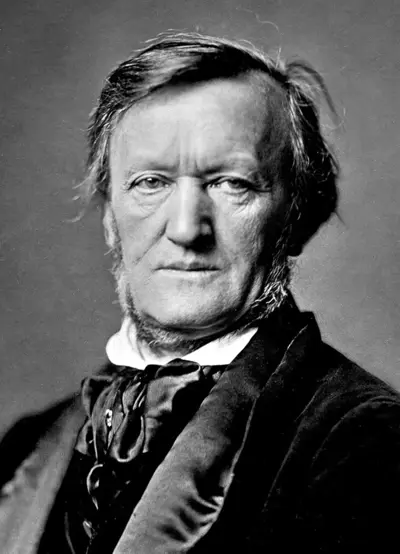
Wilhelm Richard Wagner was a German composer, theatre director, polemicist, and conductor who is chiefly known for his operas (or, as some of his mature works were later known, "music dramas"). Unlike most opera composers, Wagner wrote both the libretto and the music for each of his stage works. Initially establishing his reputation as a composer of works in the romantic vein of Carl Maria von Weber and Giacomo Meyerbeer, Wagner revolutionised opera through his concept of the Gesamtkunstwerk ("total work of art"), by which he sought to synthesise the poetic, visual, musical and dramatic arts, with music subsidiary to drama. He described this vision in a series of essays published between 1849 and 1852. Wagner realised these ideas most fully in the first half of the four-opera cycle Der Ring des Nibelungen (The Ring of the Nibelung).
