Slavoj Zizek Quotes
The United States is pursuing a series of goals (spreading democracy, asserting its hegemony, securing oil supplies) that are ultimately incompatible.
Slavoj Zizek, Slovenian Philosopher, Institute for Social Studies, “Iraq’s False Promises,” Foreign Policy, January/February 2004
Sourced by: Eigen's Political and Historical Quotations

At the end of WWII there was much tension between Russia and the Anglo-American alliance. This plan was developed but never implemented. See {613195} for Prime Minister Winston Churchill’s description of the invasion idea.


He was visiting the Middle East at the time of the interview.


Critics of this idea ask what we do when the minority of fanatic terrorists attack our troops and officials who have "brought" the rule of law to a "rogue state" like Somalia. Suicide bombers and others who want only the rule of Islamic Sharia law as opposed to rule of our law.

The United States and England maintained officially that their stance was moral and ethical. And it was for most Americans and Britons. However, there were some, whose motivation was economically self-serving as this quotation suggests. The less control Japan had over China, the more other countries could freely trade with China.


Liberia was founded by American free Negroes who emigrated. From the beginning there has been a tension between the American founders and their decedents and the indigenous tribes. King, who had just been elected President, was trying to balance the interests and values.


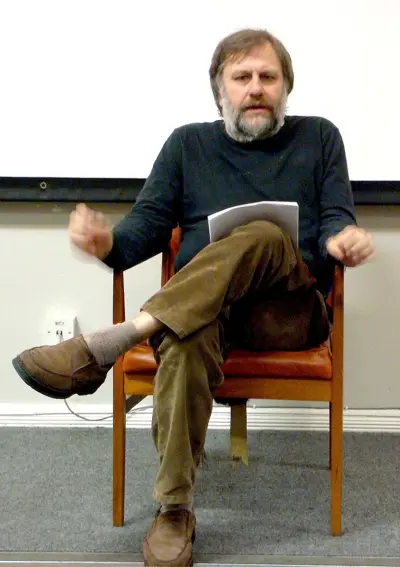
Slavoj Žižek is a Slovenian philosopher, a researcher at the Department of Philosophy of the University of Ljubljana Faculty of Arts and international director of the Birkbeck Institute for the Humanities of the University of London. He is also Global Eminent Scholar at Kyung Hee University in Seoul and Global Distinguished Professor of German at New York University. He works in subjects including continental philosophy, psychoanalysis, political theory, cultural studies, art criticism, film criticism, Marxism, Hegelianism and theology.
