Daniel Fried Quotes
The United States comes in 1945 and we basically blow the whistle.
Fried, Daniel. Interview by Brian Lamb. Q&A, C-SPAN, 2 Apr. 2017.


The only soldier ever so honored


See {624449} for the essence of the letter.


A few Americans who were too young to remember WWII hav in retrospect questioned the use of the Atomic Bomb against Japan. Young Japanese feel even stronger on this point. This quotation is very important because it comes for a senior Japanese official who knew the conditions at the time.

There were some doubts the scientists developed after Germany had surrendered as Hitler had been their greatest fear. So they were briefed on the planned invasion of the Japanese mainland and the military medical preparations for treating and caring for ½ million serious wounded casualties. In addition, given the state of war, there was expected about the same number of American Military deaths. On top of that, there would be many more Japanese military casualties plus even more Japanese civilian deaths and wounded. The use of the Atom Bomb would save all those lives but have casualties of its own, but far fewer. At the time, surprising to most people now, the use of the atomic bomb was not an issue of controversy at all. There were no Congressman who questioned it, no newspapers which editorialized against the use of the bomb. There were not even any other counties which protested its use.

The Scientific Project that developed the Atomic Bomb


The Scientific Project that developed the Atomic Bomb. The Scientific Project that developed the Atomic Bomb

This fact was one of the reasons that McCarthyism and HUAC were able to get traction. The Red Scare paranoids found something to really worry about. They overreacted, sensing the problem not as one of a large number of misguided and naïve people trying to help America do better, but as active spies controlled by the Kremlin who wanted to destroy the American way of life. There were two basic reasons these naïve officials acted that way. Many of them had not forgotten the devastation of the American people in the Great Depression and believed that capitalism had almost failed completely and the rough edge had to be taken off American capitalism by injecting some socialist principles such as stronger labor unions, ending racial and religious discrimination, controlling monopolies, and regulating critical industries. They also were mindful of the fact that the Russians were bearing the brunt of the WWII casualties—military and civilian—while killing more of the Germans and capturing more German occupied territory than the other allies together, yet they were not receiving the same level of assistance—technical, intelligence, economic and political as the British. They saw helping the Russians as saving American lives on the battlefield by making them more effective and keeping German soldiers and weapons away from the Western front and Americans. They also remembered that many in Congress were opposed to our entering WWII in Europe until Germany declared war on America. They had in many cases been apologists for Fascism and passionate enemies of communism. Some American industrialists like Henry Ford were anti-Semitic and overt admirers of Hitler. {586985} So these officials tried to redress the imbalance that existed while at the same time little was really known about Soviet Russia and the Stalin excesses that were as bad as some of Hitler’s. {634969} The only information Americans had were the terrible casualties the Russians were taking and the in kind that they were dishing out to the Germans. The number of Soviet spies in America were few and commensurate with the number of agents we had in Russia. But few Americans realized the difficulty the U. S. and the rest of the democratic world would have with Russia after the war was won.

In the Potsdam Declaration the Allies gave their demands for Japanese unconditional surrender. This was the Japanese reaction. The plans to drop the atomic bombs were then approved.


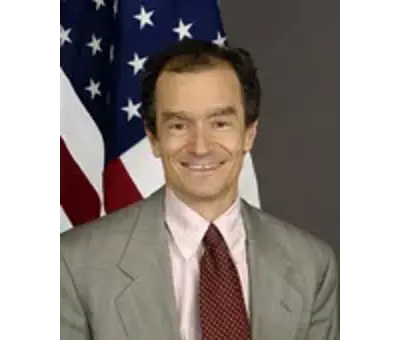
Daniel Fried (born 1952) is an American diplomat, who served as Assistant Secretary of State for European and Eurasian Affairs from 2005 to 2009, and as United States Ambassador to Poland from 1997 to 2000. He also served as a Special Envoy to facilitate the closing of the Guantanamo Bay detention camp, Cuba, and as a co-ordinator for United States embargoes. Fried retired from the State Department in February 2017, after forty years of service.
