Lord Acton Quotes
The true natural check on absolute democracy is the federal system, which limits the central government by the powers reserved, and the state governments by the powers they have ceded.
Acton, John Emerich Edward Dalberg. "Sir Erskine May's Democracy in Europe." The History of Freedom and Other Essays, Macmillan and Co., 1907, p. 98.


Most of the states would not ratify the proposed 1787 constitution as it was. Congress then added a version of what became known as the Bill of Rights in order to obtain the required concurrence of the people. Most scholars look at the 1787 Constitution and observe how little trust it had in the men who would rule and implement it. However, the people in general were even more skeptical than the intellectual leaders who drafted the Constitution and wanted even more assurances. Many people believed that most of the issues in the Bill of Rights were either implicit in the original 1787 draft or were unnecessary to spell out, but Congress had to sell the Constitution to the people as a whole and it took some very specific text to get people to believe that their rights would be protected.

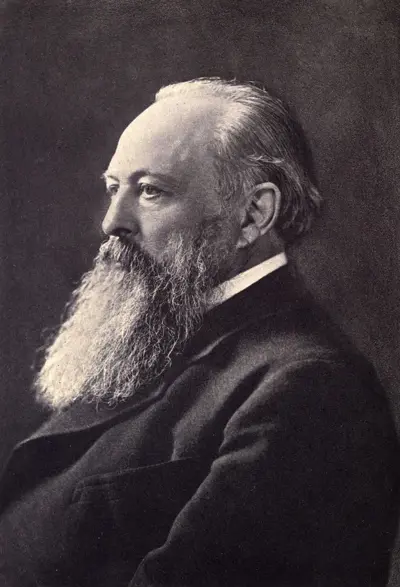
John Emerich Edward Dalberg-Acton, 1st Baron Acton, 13th Marquess of Groppoli, better known as Lord Acton, was an English Catholic historian, politician, and writer. He was the only son of Sir Ferdinand Dalberg-Acton, 7th Baronet, and a grandson of the Neapolitan admiral and prime minister Sir John Acton, 6th Baronet. Between 1837 and 1869 he was known as Sir John Dalberg-Acton, 8th Baronet.
