Elizabeth Cady Stanton Quotes
The talk of sheltering woman from the fierce storms of life is the sheerest mockery, for they beat on her from every point of thecompass, just as they do on man, and with more fatal results, for he has been trained to protect himself, to resist, to conquer.
Stanton, Elizabeth Cady. "The Solitude of Self." Address Delivered by Mrs. Stanton before the Committee of the Judiciary of the United States Congress, 18 Jan. 1892, Government Printing Office, 1892, p. 4.


See {618590} for an example of the kinds of issues which motivated her statement.


Mrs. Roosevelt thought that with the rate of improvement in society’s perception and treatment of women was improving so steadily that women in America were not far from equality. Because of the shortage of men on the home front in WWII women had performed well in virtually all occupations including welding, heavy construction and management and it was just a matter of time to reach equality of pay and parity. However, she and most feminists did not take into account the 2 million men returning from military service who wanted their jobs back. Sexists, who had been suppressed during the war when they objected to women in non traditional occupations, were no longer silenced by national necessity. An occupational backlash developed. Then a sexual one regarding contraception and family planning, (Condoms for example were illegal up to 1963 as birth control device). Each major step forward was accompanied by its own backlash and even in the Presidential Campaign of 2012 contained debate on women’s control over their own bodies relative to abortion and contraception.


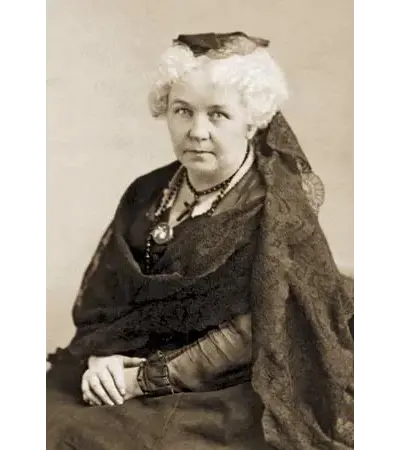
Elizabeth Cady Stanton was a leader of the women's rights movement in the U.S. during the mid- to late-1800s. She was the main force behind the 1848 Seneca Falls Convention, the first convention to be called for the sole purpose of discussing women's rights, and was the primary author of its Declaration of Sentiments. Her demand for women's right to vote generated a controversy at the convention but quickly became a central tenet of the women's movement. She was also active in other social reform activities, especially abolitionism.
