William O. Douglas Quotes
The standard of what offends 'the common conscience of the community' conflicts ... with the command of the First Amendment. ... Certainly that standard would not be an acceptable one if religion, economics, politics or philosophy were involved. How does it become a constitutional standard when literature treating with sex is concerned? Any test that turns on what is offensive to the community's standards is too loose, too capricious, too destructive of freedom of expression to be squared with the First Amendment. Under that test, juries can censor, suppress, and punish what they don't like, provided the matter relates to 'sexual impurity' or has a tendency to 'excite lustful thoughts.' This is community censorship in one of its worst forms...
William O. Douglas, 1898-1980, U.S. Supreme Court Justice, Chairman, Security & Exchange Commission, Roth v. United States, 1957
Sourced by: Eigen's Political and Historical Quotations

Often misquoted as ‘utterly without redeeming social value.’


Tinker referred to the Supreme Court Case of Tinker v. Des Moines where the court ruled that school children had Constitutional rights as well as adults. It was not possible to have a blocking system that would keep “improper” or “indecent” internet sites from library or school computers. Even if it could, the appropriate material for a 17 year old to see and a 5 year old were very different. The blocking software never worked well. Computer sophisticated students would pride themselves by showing how they could evade the blocking software, and at the same time teen age girls would have health sites blocked because they showed how to do breast self-examinations.
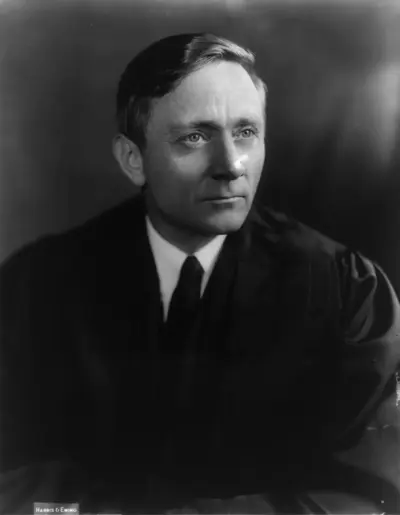
William Orville Douglas was an American jurist and politician who served as an associate justice of the Supreme Court of the United States. Nominated by President Franklin D. Roosevelt, Douglas was confirmed at the age of 40, one of the youngest justices appointed to the court. His term, lasting 36 years and 211 days (1939–75), is the longest in the history of the Supreme Court. In 1975, Time magazine called Douglas "the most doctrinaire and committed civil libertarian ever to sit on the court."
