Moshe Vardi Quotes
The stabilizing influence of the modern social welfare state emerged only after World War II, nearly 200 years on from the 18th-century beginnings of the Industrial Revolution.
Vardi, Moshe Y. "The Consequences of Machine Intelligence." Communications of the ACM, vol. 55, no. 10, Oct. 2012, p. 5.


Before America, many political thinkers believed that popular sovereignty and liberty are incompatible concepts—that the tyranny of the majority would trample liberty of all kinds of minorities: intellectuals, the wealthy, different religion, smaller religions, original thinking, cultural independence. However, Mandelbaum’s theory is that the social safety net, makes everyone wealthy to enough an extent that most will not trample others liberties for an even greater wealth. Inequality of wealth is tolerable if all have a modicum of a standard of living, but if some or many do not even have that, other’s liberties are less important than their own survival.


What makes this a noteworthy political quotation is that when he made the statement, his party had lurched to the radical right and almost no one else in the Republican party would publicly say that the Federal Government had any legitimate role that involved social services, food distribution, welfare or health care. Also the Republican Presidential candidate the day before had been discovered writing off the poorest 43 percent of the country. Heller however, was up for reelection in a state what was hit much harder than most in the Great Recession and without Federal Assistance many state residents would be in terrible circumstances and Heller would not fare well in the election if he took the then required Republican ideology. Also, Heller came from a blue collar family and had a much different outlook than most Republicans of that particular time.


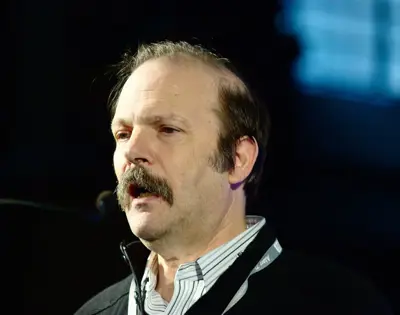
Moshe Ya'akov Vardi (Hebrew: משה יעקב ורדי) is an Israeli mathematician and computer scientist. He is a Professor of Computer Science at Rice University, United States. He is University Professor, the Karen Ostrum George Professor in Computational Engineering, Distinguished Service Professor, and Director of the Ken Kennedy Institute for Information Technology. His interests focus on applications of logic to computer science, including database theory, finite-model theory, knowledge in multi-agent systems, computer-aided verification and reasoning, and teaching logic across the curriculum. He is an expert in model checking, constraint satisfaction and database theory, common knowledge (logic), and theoretical computer science.
