Andrew Carnegie Quotes
The socialist or anarchist who seeks to overturn present conditions is to be regarded as attacking the foundation upon which civilization itself rests.
Andrew Carnegie, 1835-1919, Industrialist and Philanthropist, The Gospel of Wealth, 1889
Sourced by: Eigen's Political and Historical Quotations


This is not only attributed by reliable sources but apparently Roosevelt had said this on several occasions. The word “radical” has had different shades of meaning at different periods of American History. The origin of the word from the Latin means someone who wishes to change things very rapidly and not gradually. In the time of the Civil War, the majority of the Republicans proudly referred to themselves as “radicals” or “radical Republicans” because they wanted to abolish slavery immediately. In the late 19th century the word “radical” referred to anarchists. From the Russian Revolution onward “radicals” were communists who presumably wanted to change governments throughout the work through revolution—very rapid change. However, in the early 20th century, radicals were people who wanted to reform and regulate businesses and monopolies rapidly and it is this sense he was a radical. But by style, he was a radical in most things in that he wanted to change things and change them rapidly.

Executed by the English for his part in the Easter Uprising.


The letter was widely published. There were few left wing intellectuals who would take Lenin on at the time but Gorter was one. The immediate quotation shredded a brochure that Lenin had produced for world wide communism where he was critical of other left wing movements.


The first quotation was made shortly after the launching of The Clarion in 1891. The newspaper was relatively successful but while England moved more to the left, socialism was not embraced by Englishmen. Later, Blachford concluded that the conversion would not likely take place soon.


He was referring to the public unrest and dissatisfaction when an middle, poor or impoverished class is ground down by rigid interpretation and contract laws so that people in debt can rarely get out. He argues that this was a stark reality before most revolutions and a primary cause.


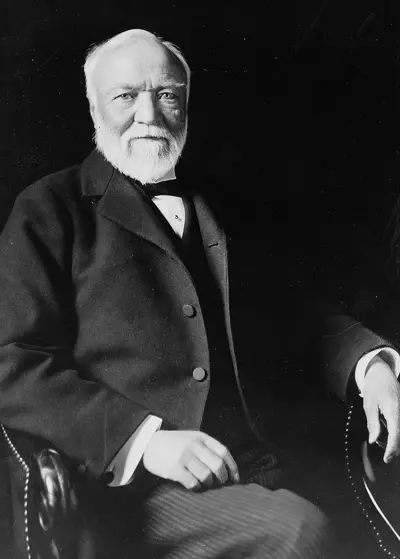
Andrew Carnegie was a Scottish-American industrialist and philanthropist. Carnegie led the expansion of the American steel industry in the late 19th century and became one of the richest Americans in history. He became a leading philanthropist in the United States and in the British Empire. During the last 18 years of his life, he gave away ~$350 million (roughly $5.2 billion in 2019) to many charities, foundations, and universities – almost 90 percent of his fortune. His 1889 article proclaiming "The Gospel of Wealth" called on the rich to use their wealth to improve society and stimulated a wave of philanthropy.
