Gore Vidal Quotes
The same people own the media that own the White House that own the Congress that own the oil fields. They all work together to give a false view of the world to the American people.
Vidal, Gore. Imperial America: Reflections on the United States of Amnesia. Nation Books, 2004.


This was her response to Sander Vanocur {618913}


Prior to Germany Declaring War on the United States, there was a small but influential group of American Fascists who were great admirers of Hitler and Mussolini and the “reforms” they had made in Germany and Italy. They saw Germany’s invasion of other European nations as a good think to “reform” Europe. The opposed American support of England and U. S. entry into the war. Their influence waned after Pearl Harbor and Germany declaring war on the U. S. Many of them arose again after WWII ended but they no longer expressed admiration for Hitler and Mussolini—concentrating at that time on anti-communisim. This caused some difficulties for the majority of anti communists who were also anti fascists.

Vladimir Lenin. Lenin was echoing criticisms that were made the world over and even by some in the United States. However, his solution to have the press controlled by the ruling party just changed the cast of characters who were propagandizing and distorting the truth. Lenin was not able to offer a better solution nor were others. However, with enough affluence the capitalist society produced enough different publishers all competing that one did not dominate public opinion. With technology of TV and the Internet, the bar to entry is so small that almost anyone can be a publisher and find an interested market. In a way technology has solved much of the problem for capitalistic and totalitarian societies alike. In the latter, even censorship is not easy or feasible on a large scale.


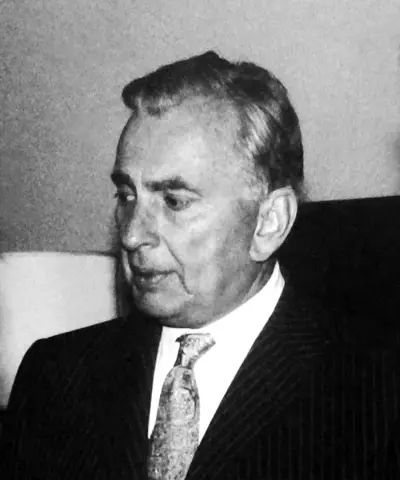
Eugene Luther Gore Vidal was an American writer and public intellectual known for his epigrammatic wit, patrician manner, and polished style of writing. Vidal was openly bisexual and his novels often dealt with LGBT characters, which was unusual at the time. Beyond literature, Vidal was heavily involved in politics. He twice sought office—unsuccessfully—as a Democratic Party candidate, first in 1960 to the United States House of Representatives (for New York), and later in 1982 to the U.S. Senate (for California).
