Oscar Niemeyer Quotes
The rule is the worst thing. You just want to break it.
Marques, Joana. "Oscar Niemeyer: The architect of a century." The Independent, 13 Jul. 2006.


The “experts” were scientists and science educators who had testified that Creationism, a notion that some religious Christians believe is a more valid explanation of the development of plants and animals than is Evolution, is a religious belief, not a science and should not be taught in a science curriculum. McLeroy believed that even in teaching science, scientific thinking and expertise should not be given more weight than religion in general and Christianity in particular. Some fundamentalist Protestants find Evolution distressing in that it contradicts the literal Biblical narrative. Other Protestants, Jews, and Catholics do not see anything in Evolution that conflicts with their spiritual view of God. They see Evolution as the mechanism that God created for the development of life. McLeroy was defeated in the next election after taking this anti scientific position, and was replaced with another fundamentalist Protestant—but one who did not believe that a particular Protestent, Christian view of the world which scientists generally reject should be taught as science in public schools.

This was written under the name of Ragnar Redbeard. There are a few scholars who believe that it was written by Jack London, but most credit Desmond.

A fatwa is a legal / theological ruling or decision made by an Islamic legal expert. Many disagree with each other just as American legal opinions often disagree.


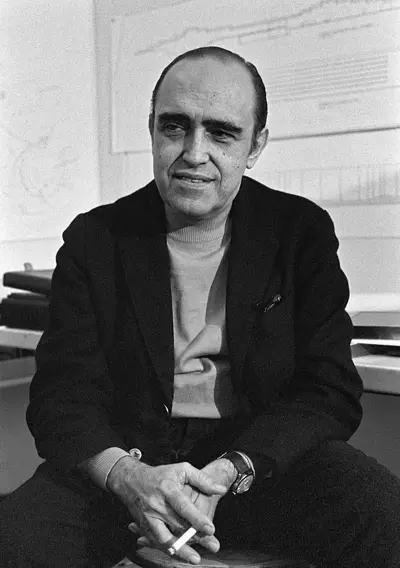
Oscar Ribeiro de Almeida Niemeyer Soares Filho, known as Oscar Niemeyer (Brazilian Portuguese: [ˈoskaʁ ni.eˈmajeʁ]), was a Brazilian architect considered to be one of the key figures in the development of modern architecture. Niemeyer was best known for his design of civic buildings for Brasília, a planned city that became Brazil's capital in 1960, as well as his collaboration with other architects on the headquarters of the United Nations in New York. His exploration of the aesthetic possibilities of reinforced concrete was highly influential in the late 20th and early 21st centuries.
