Angelus Silesius Quotes
The Rose which here on earth is now perceived by me, has blossomed thus in god from all eternity.
Silesius, Angelus. The Book of Angelus Silesius. Translated by Frederick Franck, Vintage Books, 1976.


Elijah Ben Solomon -- Vilna Gaon. The Torah is the first 5 books of the Old Testament which the Jewish People regard as the basis of religion. For many, the interpretation is that of many Fundamentalist Christians and Jews that the Bible contains truth and all truth. However, there were those who have claimed that in addition to the words and their meaning, there is a code in the Bible that gives prophetic information, claiming that all major subsequent historical events were predicted in the Biblical code.

This quotation illustrates that in the late 19th Century, there were still very prominent American scientists who were Biblical Literalists as well—a virtual intellectual impossibility. Dana was a Yale professor, and yet he rejected Evolution and had the age of the rocks he studied all wrong. At the time, America had only 1 great world class scientist (Physicist Albert A. Michelson) and American Science really became great in the 20th century. Dana was not a total incompetent however. He had amassed vast descriptive knowledge of California and other areas and was at the time considered America’s preeminent Geologist despite his lack of understanding of many fundamental aspects of his own science which was understood by many English and European scientists.


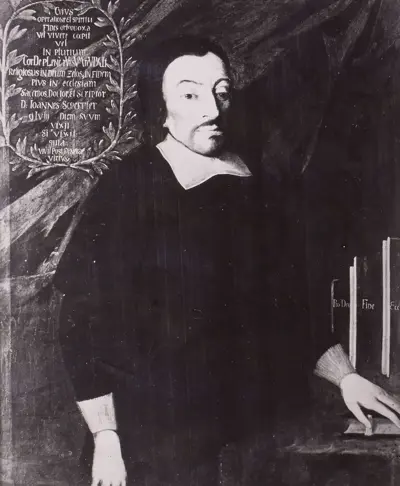
Angelus Silesius, born Johann Scheffler and also known as Johann Angelus Silesius, was a German Catholic priest and physician, known as a mystic and religious poet. Born and raised a Lutheran, he adopted the name Angelus (Latin for "angel" or "heavenly messenger") and the epithet Silesius ("Silesian") on converting to Catholicism in 1653. While studying in the Netherlands, he began to read the works of medieval mystics and became acquainted with the works of the German mystic Jacob Böhme through Böhme's friend, Abraham von Franckenberg. Silesius's mystical beliefs caused tension between him and Lutheran authorities and led to his eventual conversion to Catholicism. He took holy orders under the Franciscans and was ordained a priest in 1661. Ten years later, in 1671, he retired to a Jesuit house where he remained for the rest of his life.
