Friedrich Nietzsche Quotes
The rights a man arrogates to himself are related to the duties he imposes on himself, to the tasks to which he feels equal. The great majority of men have no right to existence, but are a misfortune to higher men.
Nietzsche, Friedrich. The Will to Power. Translated by Walter Kaufmann and R. J. Hollingdale, Vintage Books, 1968, Aphorism 872, p. 466.


This quotation is classic in that it illustrates a fundamental difference between a political and religious view of rights. Politically a citizen is entitled to rights with no requirement or condition of responsibility. Politically, we may desire and applaud or even reward responsible behavior, but we may not condition the rights on someone’s version of responsible use of the rights. Indeed, the real test is if people have rights who are generally thought to be irresponsible. See {633640} .

There was much unrest caused by many evictions of poor tenant by landlords who were not recognizing any of their “duties”. This problem and the degree of government regulatory and legislative involvement have been on the political agenda for eons and continue to this day. The duties tend to change with times and places; the rights that the property owners assert seem to be constant and uniform.


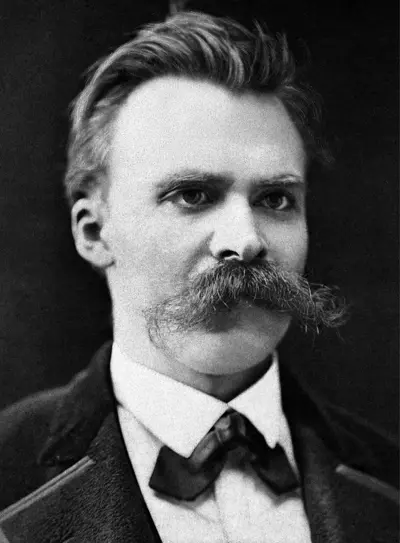
Friedrich Wilhelm Nietzsche was a German philosopher, cultural critic, composer, poet, writer, and philologist whose work has exerted a profound influence on modern intellectual history. He began his career as a classical philologist before turning to philosophy. He became the youngest person ever to hold the Chair of Classical Philology at the University of Basel in 1869 at the age of 24. Nietzsche resigned in 1879 due to health problems that plagued him most of his life; he completed much of his core writing in the following decade. In 1889, at age 44, he suffered a collapse and afterward a complete loss of his mental faculties. He lived his remaining years in the care of his mother until her death in 1897 and then with his sister Elisabeth Förster-Nietzsche. Nietzsche died in 1900.
