George Bernard Shaw Quotes
The right to know is like the right to live. It is fundamental and unconditional in its assumption that knowledge, like life, is a desirable thing.
Shaw, George Bernard. Preface. The Doctor's Dilemma, Brentano's, 1911.

Wales was the founder of Wikipedia, the greatest source of information yet in world history. He mande this statement in reaction to the Erdogon Authoritarian President blocking Wikipedia from the Turkish Internet. The Oresident had objected to an article on The Turkish Armenian Genocide in 1915. Even a century later Erdogan did not want his people to lean the hidotry of what Turkey had done.


The executive order to which this statement referred was the then new President’s first—Executive Order 13489. It was enthusiastically received by the public, historians, researchers and the media. However at the end of Obama’s two administrations, the system was a little better than when George W. Bush, blocked much of the Freedom of Information Act from being implemented. However, the agencies who want to operate in secrecy without having to deal with public criticism, had developed even more sophisticated techniques of avoiding transparency and when they must disclose, they have developed techniques to delay the process, sometimes even for years, while they study whether the material should be disclosed. The president personally declassified a few CIA files from decades ago that the agency maintained should be secret, but he did nothing else systemic so solve the problem of declassifying and material and nothing to control the over classification which virtually everyone agrees is a major problem. More material is being classified than ever.


See Louis D. Brandeis for an earlier phraseology.


The Senator was referring to the difficulty that governments have in censoring and controlling information on the Internet.


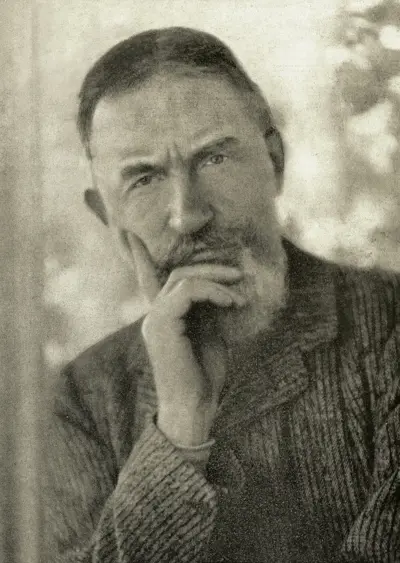
George Bernard Shaw, known at his insistence simply as Bernard Shaw, was an Irish playwright, critic, polemicist and political activist. His influence on Western theatre, culture and politics extended from the 1880s to his death and beyond. He wrote more than sixty plays, including major works such as Man and Superman (1902), Pygmalion (1912) and Saint Joan (1923). With a range incorporating both contemporary satire and historical allegory, Shaw became the leading dramatist of his generation, and in 1925 was awarded the Nobel Prize in Literature.
