William Safire Quotes
The right to do something does not mean that doing it is right.
Safire, William. "Essay; The First Amendment First." The New York Times, The New York Times Company, 21 Oct. 1982, p. A27.


Kennedy said that he was quoting Dante. However, he or his speechwriter, got the quote wrong. In the Devine Comedy, Dante had a hot place in hell for the neutral, but the hottest place was reserved for traitors. Many people since then use this quote and attribute incorrectly to Dante because Kennedy’s version is the only one with which they have come in contact.

In 1856 Kansas was at war over slavery. Kansas was to enter the Union with the resident men voting to determine whether it would be a slavery state or a free state. At first pro-slavery forces sent men into Kansas to increase the pre-slavery vote. The abolitionist anti-slavery forces outside of Kansas did the same, and had more money to finance anti-slavery settlers. Soon the pro-slavery forces, realizing that they would be outnumbered turned to violence and began to intimidate abolitionist settlers to return from whence they came. Soon abolitionists were killed and the anti-slavery men retaliated. Soon real war broke out but terrorism was the modality on most attacks as the purpose of the pro-slavery men was to frighten the abolitionists—many of whom were religious pacifists—into leaving the state. Brown and some other abolitionists retaliated with terror of their own, but Brown was rabid. He and his sons, attacked 5 pro-slavery fighters at Pottawatomie Creek, but Brown personally hacked off their limbs with a broadsword and left the bodies to intimidate and terrorize many of the pro slavery people. Brown was such a fanatic that he, in this infamous quote, claimed that his killing and butchery was “justified under the circumstances.” The phrase “Bleeding Kansas” came from the violence and terrorism in this period.


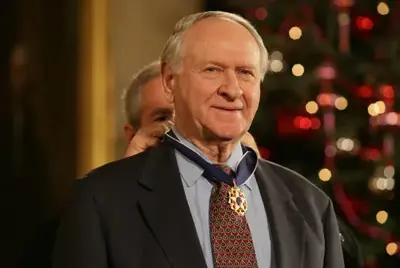
William Lewis Safir, better known as William Safire (/ˈsæfaɪər/), was an American author, columnist, journalist, and presidential speechwriter. He was a long-time syndicated political columnist for The New York Times and wrote the "On Language" column in The New York Times Magazine about popular etymology, new or unusual usages, and other language-related topics.
