Alexander Hamilton Quotes
The reasonableness of the agency of the national courts in cases in which the state tribunals cannot be supposed to be impartial, speaks for itself. No man ought certainly to be a judge in his own cause, or in any cause in respect to which he has the least interest or bias.
Hamilton, Alexander. "Federalist No. 80." The Federalist, edited by Jacob E. Cooke, Wesleyan University Press, 1961, p. 538.


Judges are restrained by the law and precedence (stare decisis), as well as having to uphold what he/she thinks are undesirable laws or find against laws he thinks are good. He must decide on the law and the facts of the particular case. And if he is an appellate or a Supreme Court judge he must make compromises to accommodate other justices hearing the case along with him/her.


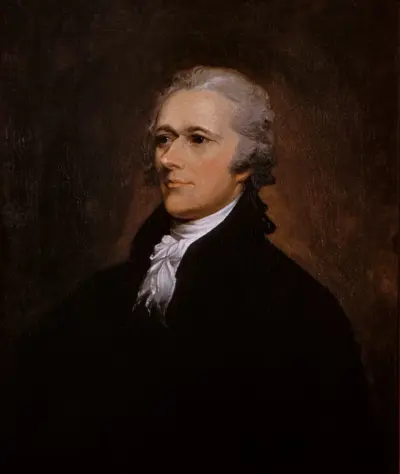
Alexander Hamilton was an American statesman, politician, legal scholar, military commander, lawyer, banker, and economist. He was one of the Founding Fathers of the United States. He was an influential interpreter and promoter of the U.S. Constitution, as well as the founder of the nation's financial system, the Federalist Party, the United States Coast Guard, and the New York Post newspaper. As the first secretary of the treasury, Hamilton was the main author of the economic policies of George Washington's administration. He took the lead in the federal government's funding of the states' debts, as well as establishing the nation's first two de facto central banks, the Bank of North America and the First Bank of the United States, a system of tariffs, and friendly trade relations with Britain. His vision included a strong central government led by a vigorous executive branch, a strong commercial economy, government-controlled banks, support for manufacturing, and a strong military.
