Bradley A. Smith Quotes
The reality is that asking the public to fund political campaigns accomplishes nothing. Candidates continue to seek interest-group support through other channels, both financial and in-kind, and corruption problems abound.
Smith, Bradley A. Unfree Speech: The Folly of Campaign Finance Reform. Princeton University Press, 2001, p. 182.


He had been serving as a University President. One change was the unlimited corporate funds that could then be donated to campaigns by corporations. “Super-Pacs” were one of these vehicles. Kerrey refused to use them. His opponent did not. His opponent was able to spend much more money on his campaign. Kerrey lost.

That particular Libertarian platform called for the abolition / repeal of Social Security, Medicare, Medicaid, the Post Office, Federal election Commission and campaign finance laws. Extreme radical ideas such as this are not typical of Libertarian Party positions before or afterwards. The quotation illustrates that there are people in America who would end public education if they could. The quotation also illustrates how a small cadre of people can capture control of a political party and create a platform that is their own personal views which may be different from most of the party members or the historical position that the party has taken. In 1980 the Libertarian Party Vice Presidential Candidate was David Koch, one half of the billionaire conservative Koch brothers. Their money financed the Libertarian Party in that year and David Koch’s views then prevailed in the party platform. Historically, the Koch brothers moved from a minor third party to the Republican party at the beginning of the 21st century when their money was able to help drive the party very far to the right from the traditions of Abraham Lincoln and Theodore Roosevelt.


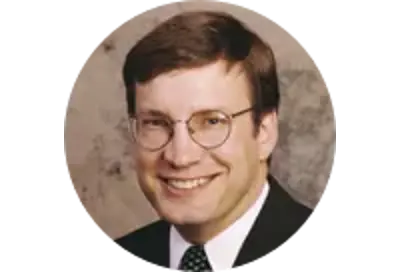
Bradley A. Smith (born 1958) is the Josiah H. Blackmore II/Shirley M. Nault Professor at Capital University Law School in Columbus, Ohio. He previously served as Commissioner, Vice Chairman and Chairman of the Federal Election Commission (FEC) between 2000 and 2005. He is best known for his writing and activities opposing campaign finance regulation.
