Zhuangzi Quotes
The raven hatches its young; the fish spew forth their eggs; the slim-waisted wasp transforms, and when a younger brother comes along the elder brother weeps. For too long I have not been able to work in harmony with these changes. So, given that I did not play my part in harmony with others, how could I expect to change people?
Palmer, Martin. The Book of Chuang Tzu. Penguin Books, 2006, p. 119.


Samuel Langhorne Clemens, 1835-1910. It was then, and still is common to refer to the results of evolution as “miracles” as Darwin had revealed the process but did not opine on the origin or creation of the process. With many religious people at the time a sensible dialogue and inquiry could be made of evolution so long as the possibility of a Supreme Being creating the mechanism of evolution remained open. Fundamentalists, however, insisted that the Bible stated that God made each of the species in its then current form and therefore they rejected even the possibility that God had created the evolutionary scheme which implemented his miracles.


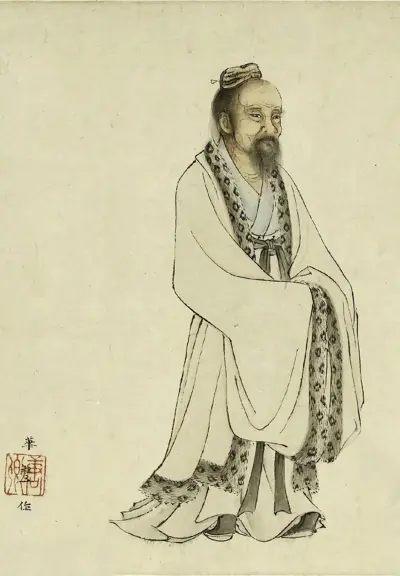
Zhuang Zhou, commonly known as Zhuangzi (also rendered as Chuang Tzu), was an influential Chinese philosopher who lived around the 4th century BC during the Warring States period, a period corresponding to the summit of Chinese philosophy, the Hundred Schools of Thought. He is credited with writing—in part or in whole—a work known by his name, the Zhuangzi, which is one of the foundational texts of Taoism.
