William A. Dembski Quotes
The question rather is how we should do science and theology in light of the impending collapse of Enlightenment rationalism and scientific naturalism. These ideologies are on the way out. They are on the way out.
Dembski, William A. Intelligent Design: The Bridge Between Science and Theology. InterVarsity Press, 1999, p. 14.


He was addressing the misunderstanding that many laypeople and most anti-evolutionists have that if Evolution is only a theory why put so much stock in it. The layman often uses the word “theory” in opposition to “fact.” But to the scientist theories are of different types—those that are as of yet speculation and those for which a strong body of evidence exists. Evolution, like Relativity, has a huge amount of evidence supporting it. Yet in time every good scientist knows that all these proven theories will be modified with new knowledge. Relativity has been demonstrated as having errors initially by Einstein himself. The essence of these things are true although elements change. The early law of gravity is the best example. We know that it is wrong in many, circumstances—in space for example. But it, none the less, is fundamental to much analysis and with our much more sophisticated understanding of it we still talk of the “Law” of gravity even though we realize that it is not quite correct in all circumstances.


In politics, a person who flip flops is suspected of not having principles. In science, a person who does not flop flop is suspected of not being scientific. As new evidence amasses, the scientific method requires that the scientist chenges. The politician is often expected to hold to his principles regardless of new or contrary evidence.


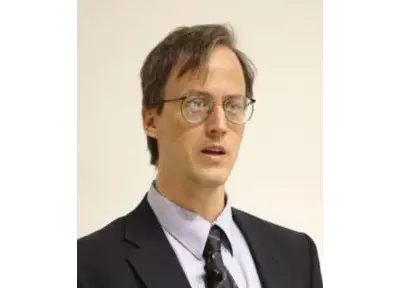
William Albert "Bill" Dembski is an American mathematician, philosopher and theologian. He was a prominent proponent of intelligent design (ID) pseudoscience, specifically the concept of specified complexity, and was a senior fellow of the Discovery Institute's Center for Science and Culture (CSC). On September 23, 2016 he officially retired from intelligent design, resigning all his "formal associations with the ID community, including [his] Discovery Institute fellowship of 20 years."
