James Baldwin Quotes
The power of the white world is threatened whenever a black man refuses to accept the white world's definitions.
Baldwin, James. "Alas, Poor Richard." Nobody Knows My Name, Dial Press, 1961.


This was a quotation from Roof's twisted confession of the fact that he walked into a black church that was holding a Bible Study Class, and gunned down 9 religious people studing the Bible. His "justification" was based on totally false "facts" but at the time many people--especially those and the extremes of political ideology simply chose the fact that supported their narrative and world vie without regard to veracity. The overwhelming majority of whites who are murdered in America are murdered by other whites and usually by people whey knew. Most rapes in the United States are committed by Whites, not Blacks, Of the Black committed rapes, most of the victims were also Black. Large proportions of the American populace believe that the Black cntribution to crime against whites is very much larger than it reall is. Of the whites who believe this, a tiny few become white supremicists and only some of those act out and commit any physical violance. However the few succetable people like Roof have heard these falsehoods so ofteh that tney not only beleive it si try but they believe taht they must do something lest the problem get worse. Of course, even if Blacks were committing all these crimes against whites, it takes a spcially sociopahic mind to believe that by killing Bible-studying, deeply religious, Christian Blacks, they will somehow stop violent Black crime.


He was driving through Tennessee and some white demonstrators were carrying racist signs insulting to Blacks. A companion asked what was the cause of Southern white racism.
From a WSJ Opinion article describing teacher demands at the Dalton School, an elite prep school in New York’s Upper East Side.


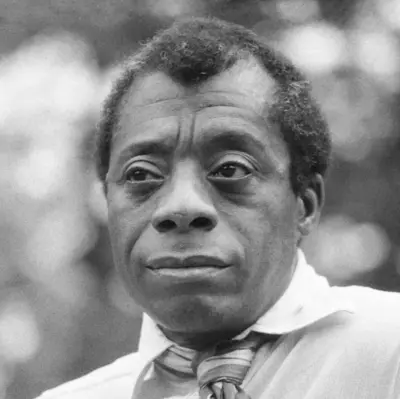
James Arthur Baldwin (August 2, 1924 – December 1, 1987) was an American writer. He garnered acclaim for his work across several mediums, including essays, novels, plays, and poems. His first novel, Go Tell It on the Mountain, was published in 1953; decades later, Time magazine included the novel on its list of the 100 best English-language novels released from 1923 to 2005. His first essay collection, Notes of a Native Son, was published in 1955.
