J. Robert Oppenheimer Quotes
The peoples of this world must unite or they will perish.
Oppenheimer, J. Robert. Robert Oppenheimer: Letters and Recollections, edited by Alice Kimball Smith and Charles Weiner, Harvard University Press, 1980, p. 317.


Historically, this quotation seems like an endorsement of motherhood, but it was an extremely important statement at the time. Eisenhower was convinced to run for the Presidency as a Republican in order to stop Senator Robert Taft and the conservative, isolationist, right wing of the Republican Party. These Republicans opposed American support of the United Nations. Eisenhower won the Republican nomination, then the general election, and clearly announced to the country and the world, that the moderate wing of the Republican Party was in control and the United Nations was an important part of our foreign policy.


MacArthur wanted to widen the Korean war and use nuclear weapons against Communist China, after erroneously assuring Truman and other American leaders that his tactics in North Korea would not cause Chinese troops to enter the war. MacArthur would not obey the orders of the civilian government and was thus fired.


Not only were the Democratic and Republican Parties at odds, but both political parties were split with the different factions very hostile to each other. The Populists and the Progressives were putting great pressure in the Democrats, and the Corporate Republicans strongly and often viscously opposed President Roosevelt. America was politically fractionated. Roosevelt called for a comity and unity which never took place.

See {640107} for another quotation creating this so called union. It made great sense to the King, but little to the Poles and Lithuanians who each saw themselves as a very different people and wanted little to so with the other.

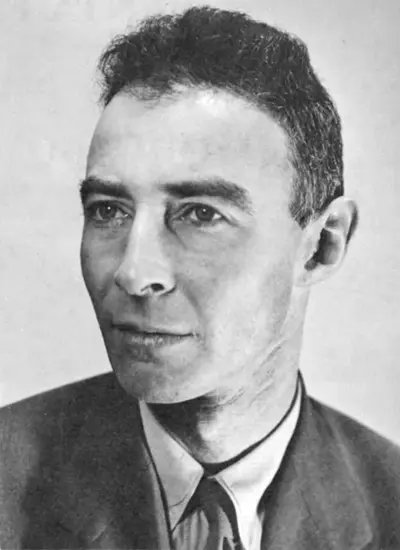
J. Robert Oppenheimer was an American theoretical physicist and professor of physics at the University of California, Berkeley. Oppenheimer was the wartime head of the Los Alamos Laboratory and is among those who are credited with being the "father of the atomic bomb" for their role in the Manhattan Project, the World War II undertaking that developed the first nuclear weapons. The first atomic bomb was successfully detonated on July 16, 1945, in the Trinity test in New Mexico.
