Arthur Schopenhauer Quotes
The ordinary method of education is to imprint ideas and opinions, in the strict sense of the word, prejudices, on the mind of the child, before it has had any but a very few particular observations. It is thus that he afterwards comes to view the world and gather experience through the medium of those ready-made ideas, rather than to let his ideas be formed for him out of his own experience of life, as they ought to be.
Schopenhauer, Arthur. Studies in Pessimism: A Series of Essays. Translated by T. Bailey Saunders, Swan Sonnenschein & Co., 1890, p. 129.


Albert Einstein, attributed to Einstein in a book by Lincoln Barnett (Journalist, Author) in which Albert wrote the book Forward. Often modernized as “Common sense is the collection of prejudices acquired by age eighteen.”


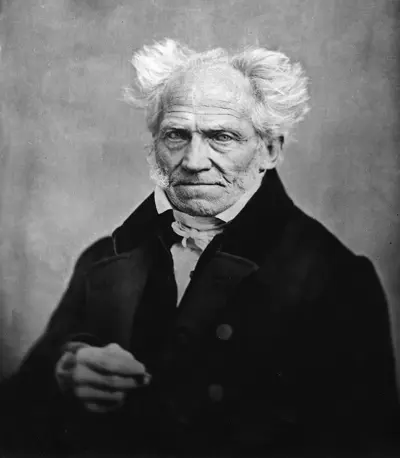
Arthur Schopenhauer was a German philosopher. He is best known for his 1818 work The World as Will and Representation (expanded in 1844), which characterizes the phenomenal world as the product of a blind and insatiable noumenal will. Building on the transcendental idealism of Immanuel Kant, Schopenhauer developed an atheistic metaphysical and ethical system that rejected the contemporaneous ideas of German idealism. He was among the first thinkers in Western philosophy to share and affirm significant tenets of Indian philosophy, such as asceticism, denial of the self, and the notion of the world-as-appearance. His work has been described as an exemplary manifestation of philosophical pessimism.
