Ida B. Wells Quotes
The only times an Afro-American who was assaulted got away has been when he had a gun and used it in self-defense.
Wells, Ida B. Southern Horrors: Lynch Law in All Its Phases. The New York Age Print, 1892, p. 23.

Johnson federalized the Michigan National Guard and sent Army troops into Detroit after racial violence broke out in 1943, but insisted that the troops not carry ammunition


Although written by a science fiction writer, this is one of the best quotations arguing for widespread gun ownership.

This is one of many instances where Black leaders advocated armed self-defense. In the early 20th century, this worried whites who often accused these blacks of advocating violence against whites. It also made non-violent, anti-gun, blacks, like Booker T. Washington, more popular.

Thirty young black men and women carrying pistols, revolvers, and shotguns, appeared at the grand entrance of the California Capitol Building. The capital police stopped them and asked what they were going to do with their guns. Bobby Seal replied by asking the police officer what he was going to do with his gun. Seale and the Black Panthers then quoted the Second Amendment to the Constitution and insisted that they had a right to carry guns. Seale led his overtly armed followers inside while police and legislators looked on in horror. They were breaking no law. See the linked quote for Seale’s statement at Sacramento.

The gun control debate has been so polarizing over the years, that the extremists on each side actually consider the other side as doing great damage to the society if not causing death of innocent people.

This was written over a decade before the Second Amendment became a part of the U. S. Constitution.


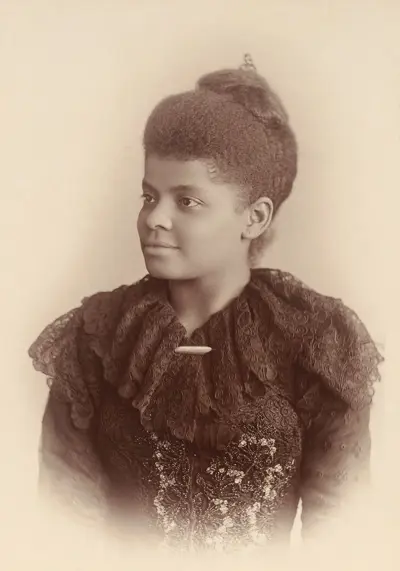
Ida Bell Wells-Barnett was an American investigative journalist, educator, and early leader in the civil rights movement. She was one of the founders of the National Association for the Advancement of Colored People (NAACP). Over the course of a lifetime dedicated to combating prejudice and violence, and the fight for African-American equality, especially that of women, Wells arguably became the most famous Black woman in America.
