William Ellery Channing Quotes
The only freedom worth possessing is that which gives enlargement to a people's energy, intellect, and virtues.
Channing, William Ellery. "Spiritual Freedom." The Works of William E. Channing, D.D., vol. 4, James Munroe and Company, 1841, p. 81.


Conservatives, while favoring free markets and a great deal of freedom for business, in his era, also supported government control over personal behavior ranging from women’s rights to control their own bodies, to governing the sexual behavior of consenting adults or censoring publications or using drugs and even including the right to commit suicide.

Samuel Langhorne Clemens, 1835-1910. Twain was very perspicacious in observing that the populations of many countries often act against their own apparent material self interest in order to establish and feel a sense of dignity, manhood, honor or ethnic pride.

Ingersoll was considered to be the greatest orator and political thinker of his day, but his overt atheistic views curtailed his elected political career.
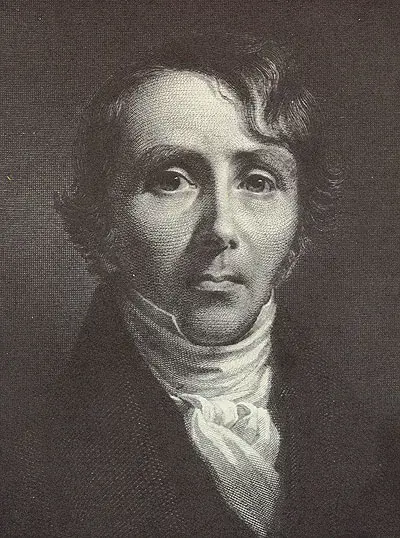
William Ellery Channing was the foremost Unitarian preacher in the United States in the early nineteenth century and, along with Andrews Norton (1786–1853), one of Unitarianism's leading theologians. Channing was known for his articulate and impassioned sermons and public speeches, and as a prominent thinker in the liberal theology of the day. His religion and thought were among the chief influences on the New England Transcendentalists although he never countenanced their views, which he saw as extreme. He espoused, especially in his "Baltimore Sermon" of May 5, 1819, given at the ordination of the theologian and educator Jared Sparks (1789–1866) as the first minister of the newly organized First Independent Church of Baltimore, the principles and tenets of the developing philosophy and theology of Unitarianism, leading to the organization in 1825 of the first Unitarian denomination in America (American Unitarian Association) and the later developments and mergers between Unitarians and Universalists, resulting finally in the Unitarian Universalist Association of America in 1961.
