John Dewey Quotes
The notion that "applied" knowledge is somehow less worthy than "pure" knowledge, was natural to a society in which all useful work was performed by slaves and serfs, and in which industry was controlled by the models set by custom rather than by intelligence. Science, or the highest knowing, was then identified with pure theorizing, apart from all application in the uses of life; and knowledge relating to useful arts suffered the stigma attaching to the classes who engaged in them.
Dewey, John. Democracy and Education: An Introduction to the Philosophy of Education. Macmillan, 1916, p. 297.


Chivalry was a set of rules that regulated the behavior of knights especially as to their behavior in battle. It was the Medieval equivalent of the Geneva Convention. At the time knights fought against knights and peasants fought against peasants. After time the fighting was mixed. Previously, if a knight was subdued by other knights, he would surrender and promise to fight any more and that would be honored. But when a small group of peasants brought down a knight in armor, he could not surrender. He had probably killed other lightly armored peasants who were friends, and the peasants did not trust the knights. So typically, the peasants just killed the fallen knight. Social class determined the concepts of honor, fairness, trust, and chivalry came to an end.


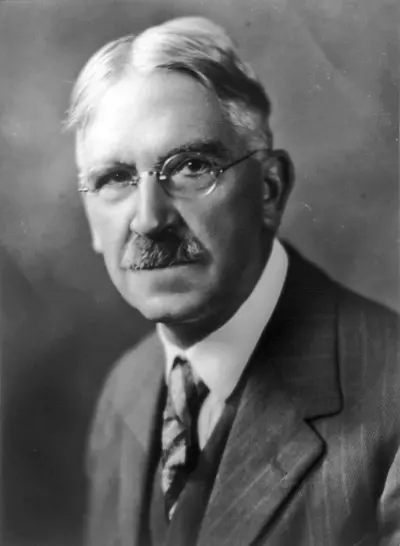
John Dewey was an American philosopher, psychologist, and educational reformer whose ideas have been influential in education and social reform. He was one of the most prominent American scholars in the first half of the twentieth century.
