Elizabeth Cady Stanton Quotes
The new religion will teach the dignity of human nature and its infinite possibilities for development. It will teach the solidarity of the race: that all must rise and fall as one. Its creed will be justice, liberty, equality for all the children of earth.
Stanton, Elizabeth Cady. The Woman's Bible. Part 2, European Publishing Company, 1898.


The issue of slavery which had been suppressed in Congress for the first decades of the nation broke out when Missouri statehood was considered. By previous agreement, slavery was not even discussed in Congress but the time period elapsed. Tallmadge not only proposed that no more slaves could come into Missouri {613176} but most shocking to the Southerners was that every person born in the new state would be free at the age of 25. In a generation, there would be no more slavery in Missouri and there would be no economic compensation for slave owners at all. The House of Representatives accepted the amendment, but it failed in the Senate. At that time, Senators were not elected by voters but were appointed by the state legislators and the Southern slave states had a disproportionate share of the senate from a population point of view. But what this quotation shows clearly that a majority of the country in 1819 were opposed to slavery and were willing to end it without compensation.


Supervisors of black soldiers reminded them that

He succeeded to the extent that he was the driving force behind the British abolition of the Slave Trade.

This was the first time that the term “human rights” was used. FDR, a personal friend of Wells, then used the term in his Four Freedoms speech and thus was the first politician to use the term. Later Mrs. Roosevelt was instrumental in using the phrase in the United nations “Declaration of Human Rights” and enshrined the term in the English and world language.


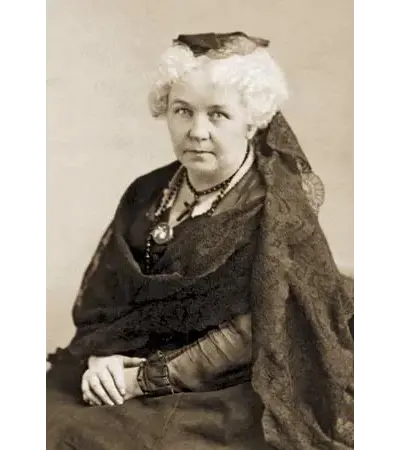
Elizabeth Cady Stanton was a leader of the women's rights movement in the U.S. during the mid- to late-1800s. She was the main force behind the 1848 Seneca Falls Convention, the first convention to be called for the sole purpose of discussing women's rights, and was the primary author of its Declaration of Sentiments. Her demand for women's right to vote generated a controversy at the convention but quickly became a central tenet of the women's movement. She was also active in other social reform activities, especially abolitionism.
