Douglas Coupland Quotes
The neighborhood I grew up in had this fence that surrounds the watershed. And if you go on the other side of that fence, there's nothing until the North Pole and down to Siberia. It's the absolute cutoff point between man and nature.


As global warming affects our entire planet, Plant pests and diseases travel North at a rate of 2 miles a year moving from the colder climates into the warmer ones where they now can thrive while they could not before the warming. That, in turn, changes the mix of trees and plants as well as distribution and range of many animals. The same thing happens in the Southern hemisphere only the warmer areas expand South rather than North.


Coulter had a unique style of stating things in the most extreme manner she could. Generally opposed to the environmental movement, this is one of her most extreme quotations. The point that she was trying to make is that development requires environmental resources and development should take precedence over conservation, lest people would be living in more primitive conditions.


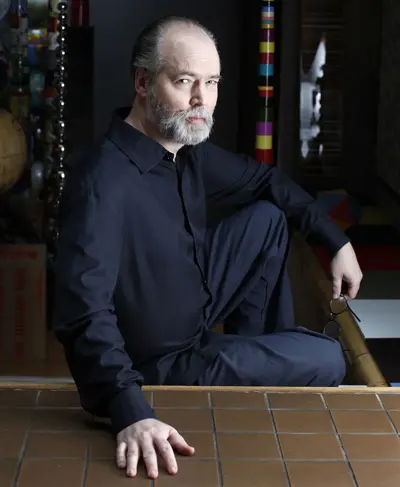
Douglas Coupland OC OBC (born 1961) is a Canadian novelist and artist. His fiction is complemented by recognized works in design and visual art arising from his early formal training. His first novel, the 1991 international bestseller Generation X: Tales for an Accelerated Culture, popularized the term such as McJob. He has published thirteen novels, two collections of short stories, seven non-fiction books, and a number of dramatic works and screenplays for film and television. He is a columnist for Financial Times. He is also a frequent contributor to The New York Times, e-flux journal, Dis, and Vice. His art exhibits include Everywhere Is Anywhere Is Anything Is Everything which was exhibited at the Vancouver Art Gallery, and the Royal Ontario Museum and the Museum of Contemporary Canadian Art, (now the Museum of Contemporary Art Toronto) and Bit Rot at Rotterdam's Witte de With Center for Contemporary Art and the Villa Stuck.
