Roman Dmowski Quotes
The nation becomes the master of its fate not only when it has many good sons, but also when it possesses enough strength to restrain its bad ones.
The “bad” ones of course were the ones who disagreed with and opposed him and his movement.
Roman Dmowski, 1864–1939, Polish Politician & Co-Founder of the Right Wing Endecja Fascist Movement, "Podstawy polityki polskiej", Przegląd Wszechpolski, July 1905
Sourced by: Eigen's Political and Historical Quotations


This is one of the major reasons that the relations between police and the communities they are policing is so important. Also, the style and courtesy that the IRS tax collectors exhibit is very important.


The article he wrote was the first serious plan and proposal to repeal Prohibition which was opposed by most people after the country had experienced the negative unintended consequents of making alcohol illegal. This was not unlike the second thoughts that many Americans began to develop regarding the War on Drugs at the end of the 20th century. Many felt the good that prohibition did (it improved the nation’s healt) was not worth the bad that came with it (crime, corruption, police brutality, disrespect for the law.)

Robespierre was the driving force behind the Reign of Terror where hundreds of thousands of French citizens were beheaded because they were accused of not being loyal enough to the regime.


Remarks before the Joint Defense Appeal of the American Jewish Committee and the Anti-Defamation League of the B’nai B’rith.


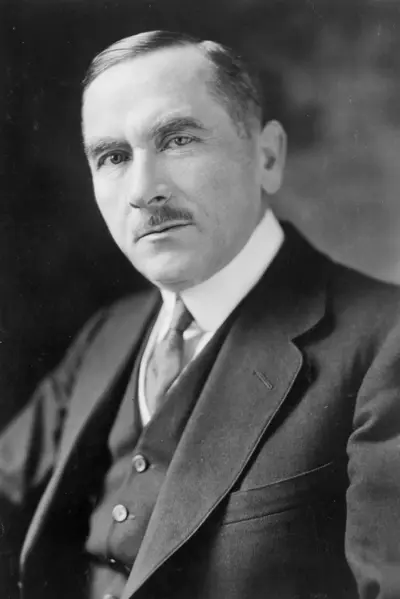
Roman Stanisław Dmowski was a Polish politician, statesman, and co-founder and chief ideologue of the National Democracy ("ND": in Polish, "Endecja") political movement. He saw the Germanization of Polish territories controlled by the German Empire as the major threat to Polish culture and therefore advocated a degree of accommodation with another power that had partitioned Poland, the Russian Empire. He favored the re-establishment of Polish independence by nonviolent means, and supported policies favorable to the Polish middle class. During World War I, in Paris, through his Polish National Committee he was a prominent spokesman, to the Allies for Polish aspirations. He was an instrumental figure in the postwar restoration of Poland's independent existence.
