Fyodor Dostoevsky Quotes
The most offensive is not their lying - one can always forgive lying - lying is a delightful thing, for it leads to truth - what is offensive is that they lie and worship their own lying.
Dostoevsky, Fyodor. Crime and Punishment. Translated by Constance Garnett, The Macmillan Company, 1914, p. 128.


The then CIA Director, Allen Dulles, fostered a practice of “adjusting” intelligence reports to support ideological policies and theories that were then in vogue. The agents in the field knew what was wanted and many adjusted their reports to coincide with the overall intelligence and policy. The station chiefs and other supervisors often ignored reports of their agents that they knew were not exactly accurate. Copeland however, just fabricated reports and “information” from sources. The honesty and integrity of the CIA intelligence operations have varied from time to time and depended much on the CIA Director at the time. Allen Dulles, though brilliant and able, fostered an ideological intelligence agency. He even went so far as to lie to the President on several occasions.


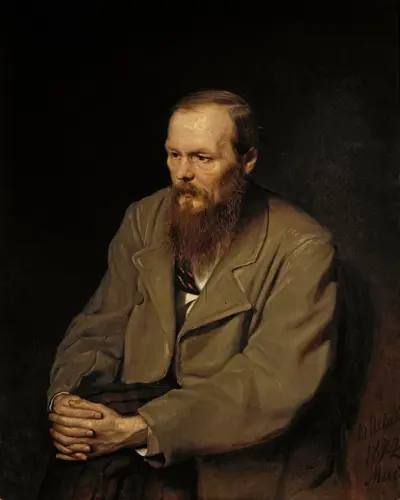
Fyodor Mikhailovich Dostoevsky, sometimes transliterated as Dostoyevsky, was a Russian novelist, philosopher, short story writer, essayist, and journalist. Dostoevsky's literary works explore human psychology in the troubled political, social, and spiritual atmospheres of 19th-century Russia, and engage with a variety of philosophical and religious themes. His most acclaimed works include Crime and Punishment (1866), The Idiot (1869), Demons (1872), and The Brothers Karamazov (1880). Dostoevsky's body of works consists of 12 novels, four novellas, 16 short stories, and numerous other works. Many literary critics rate him as one of the greatest psychological novelists in world literature. His 1864 novel Notes from Underground is considered to be one of the first works of existentialist literature.
