Nat Turner Quotes
The manner in which I learned to read and write, not only had great influence on my own mind, as I acquired it with the most perfect ease, so much so, that I have no recollection whatever of learning the alphabet
In 1831 a slave preacher, Nat Turner, led a rebellion in North Carolina killing over 50 white men. Even though Turner and the rebels were captured and executed, whites throughout the South, took vengeance on any slaves they could find.
Nat Turner, 1800–1831, Slave and Slave Revolt Leader, The Confessions of Nat Turner, The Leader of the Late Insurrections, in Southampton, Va. As fully and voluntarily made to Thomas R. Gray, 1831
Sourced by: Eigen's Political and Historical Quotations


Incredibly enough, after the Civil War and emancipation, most Virginia leaders opposed any form of rights for Blacks with one of the major reasons being that they were ignorant and uneducated. It was actually a crime to teach even a free Black to read.


Within 5 months he transformed all of written Turkish in the land.
By 1870 there were over 1000 schools in the South that had been founded and operated by the Freedmen’s Bureau. Despite the racist, negative stereotypes of Negroes, many of them were just the opposite from the stereotype as this quotation demonstrates.


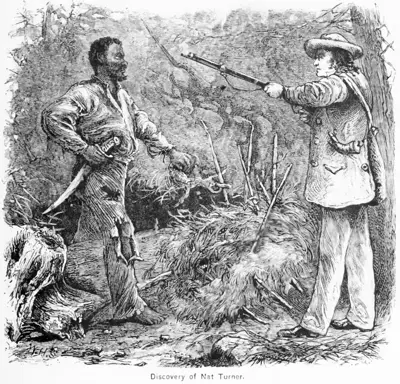
Nat Turner was an African-American enslaved preacher who led the four-day rebellion of enslaved and free black people in Southampton County, Virginia, in 1831. Born into slavery on October 2, 1800, in Southampton County, Virginia, a plantation area with more blacks than whites, Turner was recorded as "Nat" by Benjamin Turner, the man who enslaved him and his family. When Benjamin Turner died in 1810, under then current laws which made human enslavement legal, Nat was inherited as property by Benjamin's son Samuel Turner. For most of his life, he was known as "Nat", but after the 1831 rebellion, he was widely referred to as "Nat Turner". Turner knew little about the background of his father, who was believed to have escaped from slavery when Turner was a young boy. Turner spent his entire life in Southampton County.
