Mark Twain Quotes
The mania for giving the Government power to meddle with the private affairs of cities or citizens is likely to cause endless trouble, through the rivalry of schools and creeds that are anxious to obtain official recognition, and there is great danger that our people will lose our independence of thought and action which is the cause of much of our greatness, and sink into the helplessness of the Frenchman or German who expects his government to feed him when hungry, clothe him when naked, to prescribe when his child may be born and when he may die, and, in fine, to regulate every act of humanity from the cradle to the tomb, including the manner in which he may seek future admission to paradise.
Samuel Langhorne Clemens, 1835-1910. Although very much a liberal, Twain had little use for socialism on the grounds that it interfered with the independence of the individual. State religion was to him another form of state socialism.
Mark Twain, Writer, Founder, Anti-Imperialist League, "Official Physic"
Sourced by: Eigen's Political and Historical Quotations


The Kochs are the very conservative funders, philanthropists, & activists David and Charles Koch. By this definition Abraham Lincoln was certainly a socialist but so were Dwight D. Eisenhower and Ronald Reagan.


In 1905 President Roosevelt supported a Pure Food act. Business interests opposed it with such arguments as:


At that point in American History there were some who thought that the Congress was aggregating too much power. At the beginning of the 21st century we bemoaned a weak Congress and worried about an imperial and too powerful an executive while a few thought that the Judicial branch had become too powerful in “legislating from the bench.”

See also Gerald R. Ford for a later similar expression.


His reference was to his experience as an undergraduate at Dartmouth, which he and associates views as a liberal organization, while others viewed it as a conservative bastion of the establishment.

The "administrative state" was the term used for a government had had powers and used them to regulate things and areas of society without each specific regulation being voted upon by the legislature. In America sicne the New Deal there have been so many areas that have regulations that a single agency like the Environmental Protection Agency might issue in a year more regulations than the entire Congress considers in all areas put together. All these regulatory powers are delegated by Congress passing legislation authorizing it, and Congress can legislate any change in any regulation it wants, but the modern state is so complesx and areas so specialzied that Congress has preferred to delegate. There are a few who legal scholars and politicians who believe that it is unconstitutional for the legislature to delegate powers to the executive branch and no regulations have validity unless specifically passed by Comgress. There are some others who have not taken a position on this point but who believe that of an administrative state can regulate phases of citizens lives it is bound to circumscribe personal freedom as all legislation does to some extent. This quotation was used by opponents of Judge Gorsuch in arguing that he was unfit for the Supreme Court as he was out of touch with the Administrative State which America gradually became and rapidly in the New Deal and in the 80 years thereafter a very extensive administrative state. Gorsuch's views were based on classic political pholosophy but there were some ultra conservatives who did not want any regulation of business by Congress or Administrative Agencies and therefore supported Gorsuch and the few others with this view as if Agencies were not able to issue regulations there was no practical way that Congress could issue as many and regulation would be reduced which is what they desired.


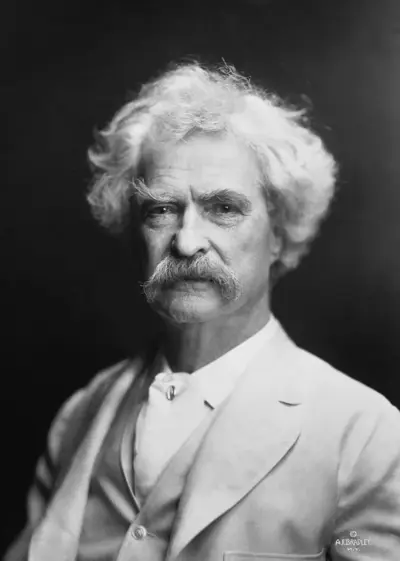
Samuel Langhorne Clemens, known by his pen name Mark Twain, was an American writer, humorist, entrepreneur, publisher, and lecturer. He was lauded as the "greatest humorist the United States has produced," and William Faulkner called him "the father of American literature". His novels include The Adventures of Tom Sawyer (1876) and its sequel, the Adventures of Huckleberry Finn (1884), the latter often called "The Great American Novel".
