Friedrich Nietzsche Quotes
The man of the future who will redeem us not only from the hitherto reigning ideal but also from that which was bound to grow out of it, the great nausea, the will to nothingness, nihilism; this bell stroke of noon and of the great decision that liberates the will again and restores its goal to the earth and his hope to man; this Antichrist and anti-nihilist; this victor over God and nothingness - he must come one day.
Nietzsche, Friedrich. On the Genealogy of Morals. Translated by Walter Kaufmann and R. J. Hollingdale, Vintage Books, 1967, p. 96.


“Slaves” in this passage referred to indentured servants. This concept is referred to as the “Jubilee” where once every 50 years all the land reverted to the original owner or heirs even if it had been rented or sold. Land therefore, was very cheap as the Jubilee year approached, as it would have to be given up. And this command of God made sure that no one could be in servitude forever.


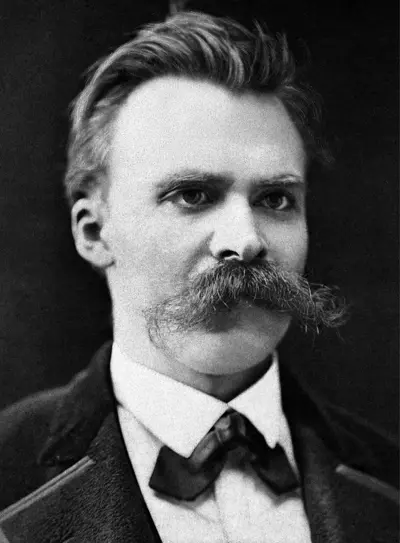
Friedrich Wilhelm Nietzsche was a German philosopher, cultural critic, composer, poet, writer, and philologist whose work has exerted a profound influence on modern intellectual history. He began his career as a classical philologist before turning to philosophy. He became the youngest person ever to hold the Chair of Classical Philology at the University of Basel in 1869 at the age of 24. Nietzsche resigned in 1879 due to health problems that plagued him most of his life; he completed much of his core writing in the following decade. In 1889, at age 44, he suffered a collapse and afterward a complete loss of his mental faculties. He lived his remaining years in the care of his mother until her death in 1897 and then with his sister Elisabeth Förster-Nietzsche. Nietzsche died in 1900.
