Jimmy Carter Quotes
The major violence now is because of a plethora, explosion almost, of rebel groups, all of whom oppose the government, and they're fighting each other, strangely precipitated by the fact that the United Nations and African Union has now planned peace talks.
Carter, Jimmy. Interview by John Roberts. CNN Newsroom, CNN, 4 Oct. 2007.


Lincoln was depressed when the Union had over 30,000 casualties in a two-week time.


After the attack on Fort Sumter, the South Sent “diplomats” to negotiation with the Government. Unfortunately for all, the South really was not open to negotiations as they only had two predetermined positions they would agree to: The first was that the Government should guarantee the perpetual right of states to have slavery if they wished and that fugitive slaves would be returned by the non-slave states. The second was that the Union should recognize the Confederacy as an independent nation and have peaceful relations between the two. The first was impossible to deliver even if the Union would agree to continue slavery, there was no way that the Federal Government could enforce the return of fugitive slaves from many northern states where they were free the second they set foot in the state, and the Northern states demanded States Rights and not being forced to return Fugitive Slaves forcing the Southern States to oppose States Rights when it came to Fugitive Slaves while favoring it for slavery itself. The Federal government could not enforce the Dred Scott Decision under the pro-South Buchanan administration. And Lincoln and most of the Northern Politicians would not accept a complete dissolution of the Union. There are no other possibilities the South would accept and there was really nothing to negotiate.


He was referring to Bosnia and other nations where civil war seems to break out over and over again—albeit much stimulated by outside forces.

More new technology was deployed in the Civil War than any other war in history and Moltke did not realize that the classic European military tactics were obsoleted. However, neither did most of the Southern Generals and many of the Union Generals. Lincoln, Grant and Sherman were the ones who developed strategies and tactics to function in the new world of warfare.


There were more than 100 million of his gun distributed over the world and his invention has been the instrument by which more people have been killed than any other weapon.

He was contrasting this with the Supreme Court decision in Bush v. Gore, where by 5 to 4, the Supreme Court made George W. Bush President. Bryer wrote a dissent and the majority of Americans wanted Gore. Yet, the people of America accepted the unpopular decision with which the majority disagreed. The alternative is settling such disputes in the streets with violence. So Bryer strongly advocates the upholding of Supreme Court decisions, even if unpopular and even if wrong as he felt Bush v. Gore was.


In Burundi, family land is divided among the male children of a family. The average Burundian woman has 6.3 children at that time, nearly triple the international fertility rate. With this population growth rate, the plots of land for each person inevitably get smaller and smaller over time. At 10,745 square miles, Burundi is slightly smaller than the U.S. state of Maryland, but it holds nearly twice as many people: about 10 million. The small plots of land are inefficient to farm and provide subsistence. So the nation was in a crises as there was little industrialization and land was essential for existence for most Burundians. See {35807} and {35809}." Andre Florian Nbasimana

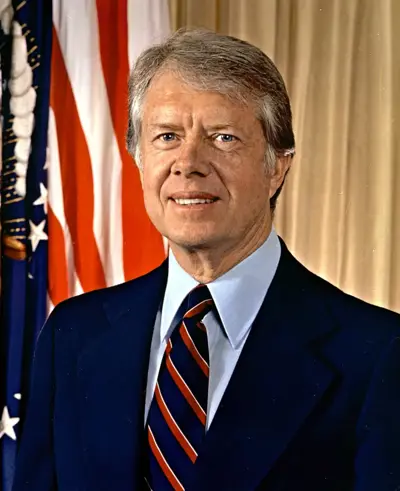
James Earl Carter Jr. is an American politician, businessman, and philanthropist who served as the 39th president of the United States from 1977 to 1981. A member of the Democratic Party, he previously served as a Georgia State Senator from 1963 to 1967 and as the 76th governor of Georgia from 1971 to 1975. Since leaving the presidency, Carter has remained engaged in political and social projects as a private citizen. In 2002, he was awarded the Nobel Peace Prize for his work in co-founding the Carter Center.
