Samuel Johnson Quotes
The magistrate has the right to enforce what he thinks, and he who is conscious of the truth has a right to suffer.
Samuel Johnson, 1709-1784, English Writer & Lexicographer, Quoted in Caute, The Year of the Barricades, 1988
Sourced by: Eigen's Political and Historical Quotations


Watkins was the first Dallas County Black DA. He was being interviewed because DNA testing proved that a man who had served 30 years in prison for rape and robbery, could not have committed the crime, and he had just been released. Watkins quotation was very significant because it set forth a philosophy that while extant in other areas of the country is almost unheard of in Texas, where there have been more innocent men convicted than in any other state. DAs in Texas usually fight every attempt to examine old evidence with modern tools.


This is an amazing speech which illustrated the best of the development and growth of Islam. Note that: The ruler who has just been given ALL secular AND religious power admits candidly that he may not be the best qualified. This would not happen for over another 1000 years and even today is very rare in any society. In addition, he invites the citizens to correct him when he is wrong. Later, Calihs would, like the Christian kings and popes claim infallibiity and kill any who suggested otherwise. And daring to correct the ruler was capital offence for most of history and is even dangerous in some Muslim countries today. Last and perhaps most amazing, the new Caliph called for an affirmative leveling of the inequality of rights and power and announces it asa one of his major responsiblities. It is this kind of vision so unheard of at the time which shows us why so many flocked to Islam at the time. From a fairness, human rights, and accoutabiity of the ruler point of view Islam was the most modern of the religions then. Tragically, other forces shaped Islam for the next 1500 years and most Muslim countries become the least modern and its rulers are least accountable to the citizenry with none of the other rights and concept of fairness that Abu Bakr and other early Islamic leaders brought.


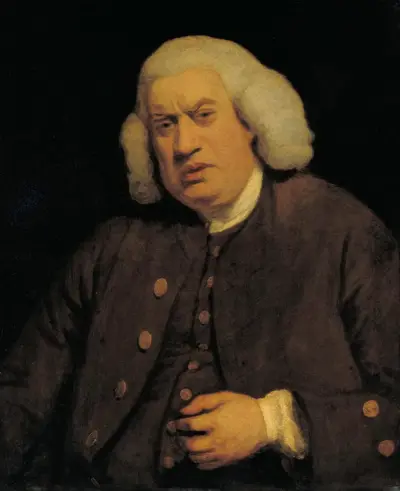
Samuel Johnson, often referred to as Dr Johnson, was an English writer who made lasting contributions to English literature as a poet, playwright, essayist, moralist, literary critic, biographer, editor, and lexicographer. Religiously, he was a devout Anglican, and politically a committed Tory. The Oxford Dictionary of National Biography describes Johnson as "arguably the most distinguished man of letters in English history". He is the subject of James Boswell's The Life of Samuel Johnson, described by Walter Jackson Bate as "the most famous single work of biographical art in the whole of literature".
