Ursula K. Le Guin Quotes
The machine conceals the machinations.
Le Guin, Ursula K. The Lathe of Heaven. Charles Scribner's Sons, 1971.


See {68645} for his vision of how this would be done.


His 50 year prediction was a little too optimistic although a large percentage of the routine, and some non-routine, jobs had become automated especially in the automobile and other manufacturing arenas, and many other fields. But there were still some other jobs that were still being done without machines in 2014. Asimov was essentially right but a little early in his timing.


See Eigen {633625} for a more explicit personal statement of the choice for the individual.


Hine was emphasizing the importance of the worker, However, since 1932, there has been technological change. Behind the building of modern machines are still the brains of men, but not so much the toil anymore. Most machines are made in modern times by a combination of the “toil” of men and robots, and the proportion done by men is steadily decreasing. And this change has been a large factor of the loss of dignity and respect that the American manual worker has undergone.

Computers, robots have replaced many more American workers than those who lost their jobs by having them replaced by foreign labor. Ironically, even in counties like China, South Korea, and a number of others, have "liost" millions of jobs to automation thenselves.
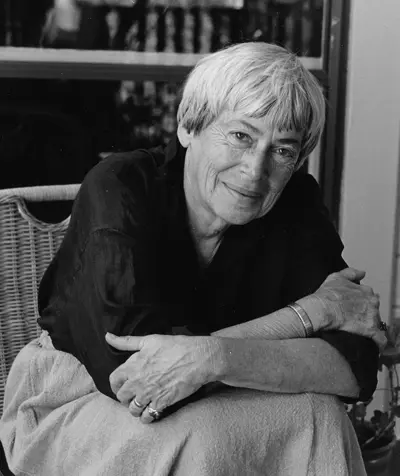
Ursula Kroeber Le Guin was an American author best known for her works of speculative fiction, including science fiction works set in her Hainish universe, and the Earthsea fantasy series. She was first published in 1959, and her literary career spanned nearly sixty years, yielding more than twenty novels and over a hundred short stories, in addition to poetry, literary criticism, translations, and children's books. Frequently described as an author of science fiction, Le Guin has also been called a "major voice in American Letters". Le Guin herself said she would prefer to be known as an "American novelist".
