William Findley Quotes
[The legislature] has no right to give monopolies of legal privilege—to bestow unequal portions of our common inheritance on favorites.
Arguing against the rechartering of the Bank of North America:
William Findley, 1741-1821, U.S. Congressman (Republican, PA), Debates and Proceedings of the General Assembly of Pennsylvania, 1786
Sourced by: Eigen's Political and Historical Quotations


2nd Baronet Peel. He was then the Chief Secretary of Ireland and only 26 years of age. Patronage jobs, cronyism, and corruption was then extreme in Irish politics.

Abrams originated this famous phrase which many have been used subsequently for various “socialized” government benefits that were available to the rich but not the poor. He was referring to the fact that at the time, the government provided housing assistance to the rich by having federally insured mortgages and granting tax deductions for the interest in home mortgages, but there was no assistance to the poor who could only afford to rent and had no tax deductions nor was there any federal public housing assistance. During the Great Recession the phrase was often used when the government gave bail out money to General Motors and the largest banks who were close to bankruptcy, but the landscaping gardener or the hot dog vendor whose business was falling because of the recession were told that is the capitalist system—there are some winners and some losers. The government officials who advocated the bailout did not disagree about the fairness and appropriateness of the Abrams phrase but if they had not bailed the banks out, the entire economic system of the country would probably have collapsed and the ensuing depression would hurt the average worker and the poor even more. Related to the recent “too big to fail” concept.

In 1881 this view was that of a radical political outlier. In the first decades of the 21st century, this was a generally acceptable political viewpoint held by members of both major political parties.


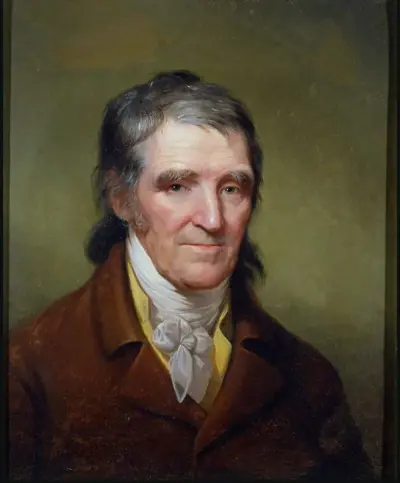
William Findley was an Irish-born farmer and politician from Westmoreland County, Pennsylvania. He served in both houses of the state legislature and represented Pennsylvania in the U.S. House from 1791 until 1799 and from 1803 to 1817. By the end of his career, he was the longest serving member of the House, and was the first to hold the honorary title "Father of the House". Findley was elected to the American Philosophical Society in 1789.
