Gebran Tueni Quotes
The Lebanese security authorities and the remnants of the Syrian system in Lebanon, and directly the Syrian regime from top to bottom, is responsible for every crime and every drop of blood spilled.
Syria and its Terrorist Lebanon Proxy Hezbollah were trying to control Lebanon. Syrian troops had been stationed in Lebanon at the request of Hezbollah, which had a narrow plurality in the parliament but did not control the Lebanese Army. Most Lebanese who were not Hezbollah supporters opposed their Islamic fundamentalist approach. They also resented Syrian troops occupying Lebanese soil and intimidating the politicians. After Tueni publicly blamed Syria, the Syrian leadership then instructed Hezbollah to assassinate Tueni which they did in 2005. It took another 5 years for the United Nations investigation found officially that it was Hezbollah operatives that were the assassins.
Gebran Tueni, 1957–2005, Editor and publisher of the mass circulation An-Nahar daily newspaper, Member of The Parliament of Lebanon, Statement, June 2, 2005, following the assassination of colleague Samir Kassir
Sourced by: Eigen's Political and Historical Quotations

Syria and its Terrorist Lebanon Proxy Hezbollah were trying to control Lebanon. Syrian troops had been stationed in Lebanon at the request of Hezbollah , which had a narrow plurality in the parliament but did not control the Lebanese Army. Most Lebanese who were not Hezbollah supporters opposed their Islamic fundamentalist approach and their denial of any rights to Christians, Jews, Druse or other minority communities which and been a part of Lebanon long before Hezbollah even existed. They also resented Syrian troops occupying Lebanese soil and intimidating the politicians. This letter started a groundswell to end the Syrian occupation. Gebran Tueni became the de facto leader opposing Syrian occupation. Syria then instructed Hezbollah to assassinate Tueni which they did in 2005. It took another 5 years for the United Nations investigation found that it was Hezbollah operatives that were the assassins.


This statement was made before the 2012 Syrian Revolution.


The Arab armies of Egypt, Syria, Jordan and the PLO were preparing a coordinated attack on Israel. After statements like this, the Israeli’s preempted the attack, routed the Egyptian Airforce and Army, and then defeated the other three. The Arab “War of Liberation” resulted in the Arabs losing more with Israel tripling it’s control of area. The quotation however cast a pall over attempts thereafter to create a Palestinian State as in effect the PLO had announced a policy of a Holocaust—the extermination of the Israelis. The dispute over land was not for the Jewish state a land negotiation amenable to compromise and give and take, but instead was an existential threat to Israel whereby any compromise might result in the death of the entire population. As the ultimate intention of the PLO had been revealed.
Assad and the Syrian rulers not only committed international crimes against the Lebanese, but in 2012 started murdering thousands of their own Syrian people who lived in areas which had people critical of the regime.


Paul tended to be one of the very few Republicans who did not favor American intervention in Syria.


The convoy was heading for the city of Alleppo that had been under siege by the government for weeks. 22 UN Aid Workers were killed and half the cargo was destroyed. Syria had been in a Civil War for a number of years, and the Government of Bashar al-Assad had committed one atrocity after another. A cease fire had been agreed to and the UN notified all parties to the war about the humanitarian convoy’s schedule and route. It was not known whether the government had decided to attack the convoy to put more pressure on the people in Aleppo to end their rebellion or the attack was made by local commanders of government troops who did not want to see the pressure on Aleppo lifted.


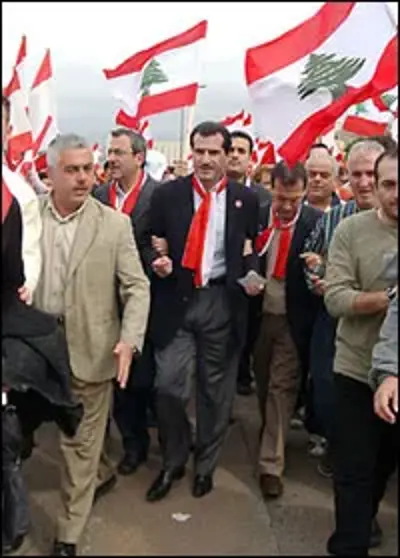
Gebran Ghassan Tueni was a Lebanese politician and the former editor and publisher of daily paper An Nahar, established by his grandfather, also named Gebran Tueni, in 1933.
