Mark Shields Quotes
The important thing to understand about legislators is that there are dozens of competing interests and issues that occupy them. They are stretched thin.
Shields, Mark. Quoted in The Citizen's Guide to Lobbying Congress, by Donald E. deKieffer, Chicago Review Press, 2007, p. 32.


In the 1960s, the cigarette companies and their lobbyists paid consultants and some scientists to demonstrate that tobacco did not cause cancer. By the beginning of the 21st century, the practice of lobbyist bought research was very common. The lobbyists realized that their many might alter the approach and quality of the research so the results would support their political points of view. If the studies did not, the lobbyists and industries simply did not make the results public, and the terms of their financing often prohibited the consultants from releasing information on their own,


American Congressional politics had reached the point where whenever a member of Congress voted on a controversial issue, there would be enough lobbyists, corporation, money and single issue voters to run a candidate against the member of Congress in the primaries. So even if a politician voted with the majority of his/her constituency in a controversial issue, an irate minority with money could possible defeat the member in the primary election. Even if the member won the primary, he/she would still have to raise more money to contest it and then the member might be so wounded by a bitter negative primary that he/she would be vulnerable in the general election.

He made this quotation when he was a member of the Wisconsin State legislator. He was describing the influence and interaction that corporations had with the Wisconsin state legislative process.


Synar was one of the members of Congress that finally mounted the first agenda which grew steadily and once the American public realized that cigarettes was by far the largest preventable cause of death of Americans. Even after all the effort and improvement, the tobacco companies facilitated over 300,000 deaths a year. See {637256} for the responsibility of the tobacco companies.
This was one of the reasons that President Eisenhower warned about the ‘Military-Industrial Complex. See {641114}.

They were discussing the Civil Right Bill of 1964 which they all wanted to pass. See {605438} . However, they faced a filibuster from the Southern Senators who had always before used this tactic and blocked Civil Rights legislation. However, the President here committed himself to the one way to take most of the power out of the filibuster. Accept a shutdown of the Senate, give up the rest of the President’s legislative program but the filibuster blocks all legislation that the Southerners wanted like cotton and tobacco subsidies.
At the time many members of Congress actually allowed the American Petroleum Institute and other special interests who donated enough money to have their representatives draft legislation and markup language. There were enough members of Congress who would not pass any legislation unless the American Petroleum Institute – the voice of the oil industry – was in favor of it.

Her then opponent in the Democratic Primary race for the Presidential numeration, Barak Obama, was captivating many voters by describing all the reforms and changes he would make if he were president. Clinton, with more experience had, as first lady, tried to pass a Health Reform Bill and various special interests mobilized to stop it. The Democratic voters chose Obama. He passed a health reform bill narrowly, but was able to do little else that he had promised. Hillary was right.
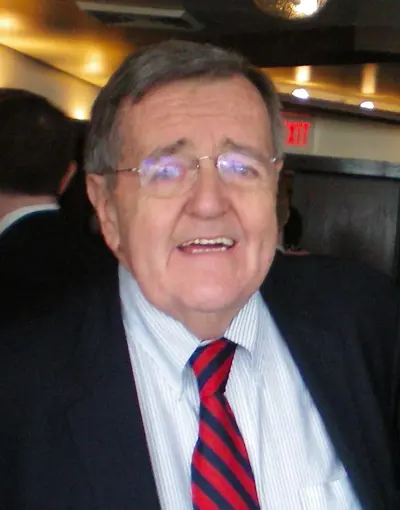
Mark Stephen Shields is an American political columnist and commentator. He has worked in leadership positions for many Democratic candidates' election campaigns.
