Jose Ortega y Gasset Quotes
The history of the Roman Empire is also the history of the uprising of the Empire of the Masses, who absorb and annul the directing minorities and put themselves in their place. Then, also, is produced the phenomenon of agglomeration, of "the full." For that reason, as Spengler has very well observed, it was necessary, just as in our day, to construct enormous buildings. The epoch of the masses is the epoch of the colossal.
Ortega y Gasset, José. The Revolt of the Masses. W. W. Norton & Company, 1932, p. 13.


Morales, a full blooded Indian in a country where whites of European origin had always dominated the politics was warned against running in an election that was likely to be rigged against him. Even if he won the plurality of the vote, Bolivian law provided for the Parliament with few of his sympathizers to elect the president. However, Morales made this famous statement in a country where the last two Presidents had been brought down by people rioting in the streets. Morales surprised everyone be not only winning the plurality but winning by a large majority.


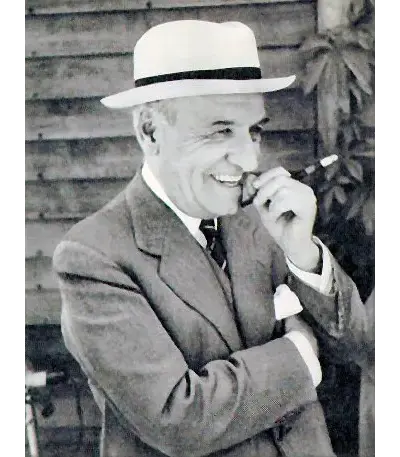
José Ortega y Gasset was a Spanish philosopher and essayist. He worked during the first half of the 20th century, while Spain oscillated between monarchy, republicanism, and dictatorship. His philosophy has been characterized as a "philosophy of life" that "comprised a long-hidden beginning in a pragmatist metaphysics inspired by William James, and with a general method from a realist phenomenology imitating Edmund Husserl, which served both his proto-existentialism (prior to Martin Heidegger's) and his realist historicism, which has been compared to both Wilhelm Dilthey and Benedetto Croce."
