John Ray Quotes
The heart is the first part that quickens, and the last that dies.
Ray, John. A Collection of English Proverbs. Cambridge, John Hayes for W. Morden, 1670.


The law is far behind science in many areas, but one dramatic one is the notion of life itself. For the criminal law and for benefits entitlement, when life begins and when it ends are traditionally important. Yet is a very complex question in many cases. Abortion is another controversial area. Under ancient Jewish Law, a fetus is considered a living person when the crown of the head can be viewed from the mother’s vagina. Modern science has demonstrated that depending on how you define life, the fetus itself is alive during the pregnancy. But if one goes further with modern science, the sperm and egg cells are alive before conception. So are millions of other cells in the human body which we kill routinely—some intentionally as when we take an antibiotic to terminate “undesirable” bacteria. Many orthodox Hindus who will not kill living animals will kill living cells such as when they eat yogurt. Scientists have in recent times resisted trying to define the term “living” not only because of its complexity, but because almost any definition would soon be obsoleted by new knowledge which is accumulating so rapidly. Science simplifies and clarified many phenomena, but also makes others much more complex.


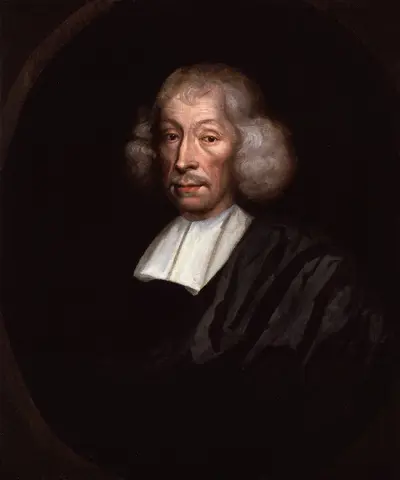
John Ray FRS was an English naturalist widely regarded as one of the earliest of the English parson-naturalists. Until 1670, he wrote his name as John Wray. From then on, he used 'Ray', after "having ascertained that such had been the practice of his family before him". He published important works on botany, zoology, and natural theology. His classification of plants in his Historia Plantarum, was an important step towards modern taxonomy. Ray rejected the system of dichotomous division by which species were classified according to a pre-conceived, either/or type system, and instead classified plants according to similarities and differences that emerged from observation. He was among the first to attempt a biological definition for the concept of species.
