Bernard Baruch Quotes
The greatest blessing of our democracy is freedom. But in the last analysis, our only freedom is the freedom to discipline ourselves.
Baruch, Bernard M. Baruch: The Public Years. Holt, Rinehart and Winston, 1960.


The fundamental conflict in many societies is between whether freedom is absolute with all entitled or whether some can determine for others whether they can use their freedom “appropriately.”

The great irony was that under the British, government of India, including the Pakistan area was quite good. However, after independence, India developed democratic government and is improving its governance to where it is almost good government. Pakistan, in marked contrast, had a democracy when Independence was attained and quickly fell into one dictatorship after another. And none of the governments came close to being good Government. Pakistan has a very corrupt and incompetent government—both military and civilian. However, at the time this quotation was made, the leaders of Pakistan were hopeful about and committed to good and democratic government. But neither ever happened.


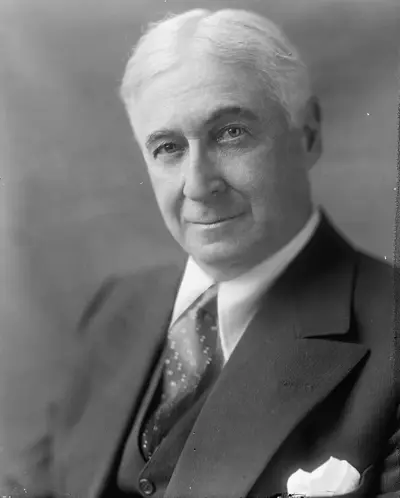
After amassing a fortune on the New York Stock Exchange, he impressed President Woodrow Wilson by managing the nation's economic mobilization in World War I as chairman of the War Industries Board. He advised Wilson during the Paris Peace Conference. He made another fortune in the postwar bull market, but foresaw the Wall Street crash and sold out well in advance. In World War II, he became a close advisor to President Roosevelt on the role of industry in war supply, and he was credited with greatly shortening the production time for tanks and aircraft. Later he helped to develop rehabilitation programs for injured servicemen. In 1946, he was the United States representative to the United Nations Atomic Energy Commission, though his Baruch Plan for international control of atomic energy was rejected by the Soviet Union.
