Illuminati Quotes
The great strength of our Order lies in it's concealment, let it never appear in any place in it's own name, but always covered by another name, and another occupation. None is fitter than the three lower degrees of Freemasonry, the public is accustomed to it, expects little from it, and therefore takes little notice of it. Next to this, the form of a learned or literary society is best suited to our purpose, and had Freemasonry not existed, this cover would have been employed; and it may be much more than a cover, it may be a powerful engine in our hands. By establishing Reading Societies, and subscription libraries, and taking these under our direction, and supplying them through our labours, we may turn the public mind which way we will…. A literary society is the most proper form for the introduction of our order into any state where we are yet strangers
The Illuminati was a secret society. At the time, anyone who differed with the Church on issues of philosophy, ethics or religion could be tortured and burned at the stake, and anyone who criticized the Monarchy could be tortured and hung or beheaded. The result was the concept of a secret society of which the Illuminati was one. The last sentence, once it became known generally, made established monarchies and their governments very suspicious of all literary societies. To this day, literary societies are suspect in most countries as a hotbed of anti-governmetn activity, if not by the Illuminati then by some other clandestine groups. In the first half of the 20th century in America, the Communist Party infiltrated several literary societies.
Illuminati, German Secret Society, Society Operational Manual, c. 1790, The Writings and Correspondence of Adam Weishaupt and the Bavarian Illuminati
Sourced by: Eigen's Political and Historical Quotations

The Illuminati was a secret society. At the time, anyone who differed with the Church on issues of philosophy, ethics or religion could be tortured and burned at the stake, and anyone who criticized the Monarchy could be tortured and hung or beheaded. The result was the concept of a secret society of which the Illuminati was one.

The Illuminati was a secret society. At the time, anyone who differed with the Church on issues of philosophy, ethics or religion could be tortured and burned at the stake, and anyone who criticized the Monarchy could be tortured and hung or beheaded. The result was the concept of a secret society of which the Illuminati was one. In this quotation, the founder stresses the importance of selecting secret members of the society from key occupations so they could influence the political order of the day. It was this quotation which has caused deep suspicion of secret societies from the Illuminati to the Masons.

The Illuminati was a secret society. At the time, anyone who differed with the Church on issues of philosophy, ethics or religion could be tortured and burned at the stake, and anyone who criticized the Monarchy could be tortured and hung or beheaded. The result was the concept of a secret society of which the Illuminati was one.


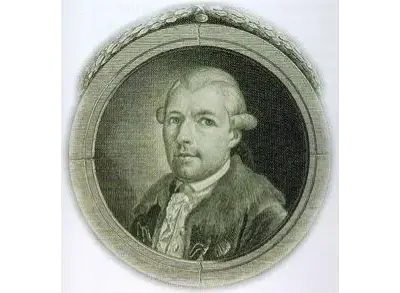
The Illuminati (plural of Latin illuminatus, 'enlightened') is a name given to several groups, both real and fictitious. Historically, the name usually refers to the Bavarian Illuminati, an Enlightenment-era secret society founded on 1 May 1776 in Bavaria, today part of Germany. The society's goals were to oppose superstition, obscurantism, religious influence over public life, and abuses of state power. "The order of the day," they wrote in their general statutes, "is to put an end to the machinations of the purveyors of injustice, to control them without dominating them." The Illuminati—along with Freemasonry and other secret societies—were outlawed through edict by Charles Theodore, Elector of Bavaria, with the encouragement of the Catholic Church, in 1784, 1785, 1787, and 1790. During subsequent years, the group was generally vilified by conservative and religious critics who claimed that the Illuminati continued underground and were responsible for the French Revolution.
