Ayn Rand Quotes
The government was set to protect man from criminals-and the constitution was written to protect man from the government. The Bill of Rights was not directed at private citizens, but against the government-as an explicit declaration that individual rights supersede any public or social power.
Rand, Ayn. "Man's Rights." The Virtue of Selfishness, Signet, 1964, p. 114.


At the time most of the members of Congress were worried about the “General Government”—their term for the Federal Government---than they were, the state governments from which they had come and were in their minds represented. If would be almost a century before it was generally accepted that the States themselves must follow the Constitution and its amendments. Madison was way ahead of his time, and saw that rights must be protected from all levels of government.

Note the use of the phrase “against the government.” One of the unique aspects of the American Constitution and The Bill of Rights is that the government is considered a potential and even probable infringer on the liberties of the people. It is almost as though the government was the potential enemy. Modern libertarians state this very explicitly and it is ever present in the views of both the right and left wings of American politics. Most centrists recoil at the thought that some citizens see the government as the enemy, but even in America there have been times where the government has infringed on the rights of citizens only to have the courts or future administrations and Congresses correct the error.


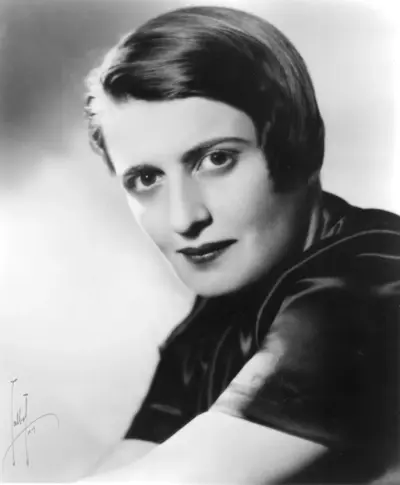
Ayn Rand was a Russian-American writer and philosopher. She is known for her two best-selling novels, The Fountainhead and Atlas Shrugged, and for developing a philosophical system she named Objectivism. Born and educated in Russia, she moved to the United States in 1926. She had a play produced on Broadway in 1935 and 1936. After two early novels that were initially unsuccessful, she achieved fame with her 1943 novel, The Fountainhead. In 1957, Rand published her best-known work, the novel Atlas Shrugged. Afterward, she turned to non-fiction to promote her philosophy, publishing her own periodicals and releasing several collections of essays until her death in 1982.
