Daniel J. Elazar Quotes
The frontier is not merely a dramatic imagery but a very real process, indeed the basic socio-technical process that informs the experience of certain people and countries. As a process, it is dynamic and essentially progressive, although fraught with problems of its own, as is every other dimension of human life.
Citizen of U. S. & Israel
Daniel J. Elazar, 1934-1999, Political Scientist Secretary of the American Political Science Association, President, Israel Political Science Association, Member, U.S. Advisory Commission on Intergovernmental Relations, Founder and President of the Jerusalem Center for Public Affairs, The Frontier as Chain Reaction, 1996
Sourced by: Eigen's Political and Historical Quotations


He was urging the majority Sinhalese to be more aggressive in dealing with the Tamils.


The Cold War was raging, newly independent nations were emerging from colonial rule, and there were revolutions in some parts of the world.

The highway was planned to go through a poor neighborhood which had a high percentage of Black residents—all of whom would have to find other housing and move to make room for the highway. If the government plans a highway through a wealthy area, the cost to condemn and pay for the land will be much greater than if a poor neighborhood is acquired. For urban highways, the poor almost always bear a disproportionate share of the inconvenience while the major benefit inures to the wealthy and middle class. Abbot had been a labor organizer and a professional artist before he entered politics. The graphic is of his famous poster which by itself stopped the plans to build the highway very quickly.


He was a captive of the Spaniards at the time. They later murdered him


this is a joke Tutu has used, but variants of it exist which are not original to him.

See Howard Zinn, 1922-2010 {38477} for a later, narrower view with respect to America.

Most of the communications technologies were not necessities but were conveniences which so changed society that they became necesseties years after they were ivented and first deployed.
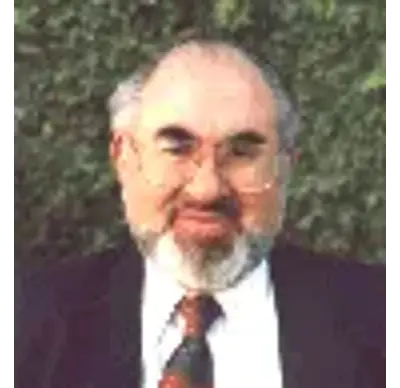
Daniel Judah Elazar was a political scientist known for his seminal studies of political culture of the US states. He was professor of political science at Bar-Ilan University in Israel and Temple University in Pennsylvania, and director of the Center for the Study of Federalism at Temple University and the founder and president of the Jerusalem Center for Public Affairs.
