Samuel Richardson Quotes
The first reading of a Will, where a person dies worth anything considerable, generally affords a true test of the relations' love to the deceased.
Richardson, Samuel. A Collection of the Moral and Instructive Sentiments, Maxims, Cautions, and Reflexions, Contained in the Histories of Pamela, Clarissa, and Sir Charles Grandison. S. Richardson, 1755.


Conservatives have been trying to eliminate estate taxes—sometimes called “inheritance taxes” for years. One of their most effective techniques was to create their own pejorative language to describe estate taxes and then to have all conservatives use that description and never say “estate taxes”. While this shifted public opinion somewhat, the majority of Americans still tended to agree with Sanders and estate taxes remained in force then. The estate taxes only were levied on the wealthiest Americans—less than 2 percent.


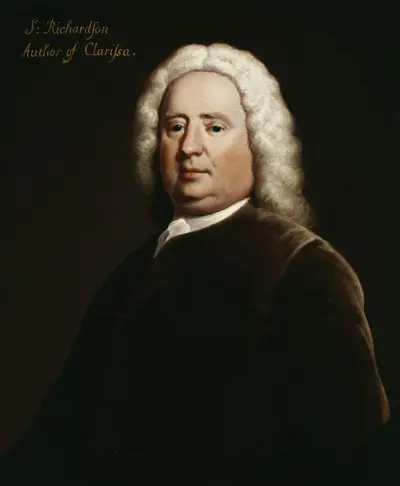
Samuel Richardson was an English writer and printer best known for three epistolary novels: Pamela; or, Virtue Rewarded (1740), Clarissa: Or the History of a Young Lady (1748) and The History of Sir Charles Grandison (1753). He printed almost 500 works during his life, including journals and magazines, working periodically with the London bookseller Andrew Millar. Richardson had been apprenticed to a printer, whose daughter he eventually married. He lost her along with five sons, but remarried and had four daughters who reached adulthood, but no male heirs to continue the print shop. As it ran down, he wrote his first novel at the age of 51 and immediately joined the popular, admired writers of his day. Leading figures he knew included Samuel Johnson and Sarah Fielding, and the eminent physician and Behmenist George Cheyne and the theologian and writer William Law, whose books he printed. At Law's request, Richardson printed some poems by John Byrom. In the literary world he rivalled Henry Fielding, and the two responded to each other's literary styles.
