William Graham Sumner Quotes
The first instinct of the modern man is to get a law passed to forbid or prevent what, in his wisdom, he disapproves.
William Graham Sumner, 1840-1910, Political Scientist & Philosopher, The Absurd Effort To Make The World Over, March 1894
Sourced by: Eigen's Political and Historical Quotations

Spinoza’s ideas were considered so radical and dangerous that he was the only man in history who was excommunicated by the Catholics, the Jews and the Muslims.


The country had just gotten rid of Prohibition. However, there was substantial censorship of literature on the part of the Post Office, then a government agency. Abortion was then illegal in every state, and in many states it was a criminal offence to sell or distribute condoms. Homosexuality was a crime in most states and it disqualified a person from Federal employment as did a woman who had borne a child out of wedlock. Films were censored, and in some states, the only legal position for a married couple to have intercourse was the so called “missionary position”. All others were often a crime. Store owners could not open on Sunday, and Christian prayers were compulsory in many areas of society.

Suggestions of prohibition of alcohol have been made for a long time in America. It was tried for a few years in he early 20th century. Instead, alcohol is regulated in most parts of America.


Adventists, like Jews and other groups believe that Sunday was the first Biblical day, and Saturday, the 7th and the Sabbath. Senator Blair had introduced a bill to make Sunday, the National Sabbath and require that all respect it. It was fought by the Adventists and others.


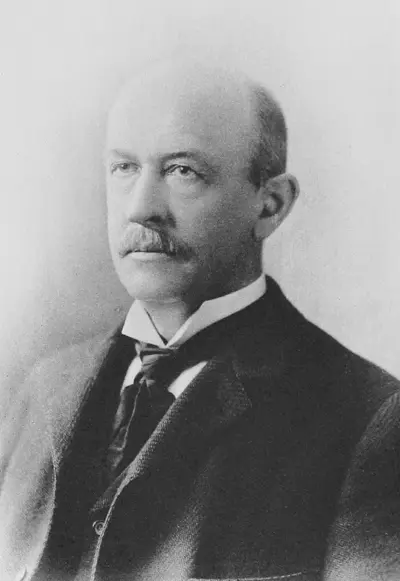
William Graham Sumner was a classical liberal American social scientist. He taught social sciences at Yale, where he held the nation's first professorship in sociology. He was one of the most influential teachers at Yale or any other major school. Sumner wrote widely within the social sciences, with numerous books and essays on American history, economic history, political theory, sociology, and anthropology. He supported laissez-faire economics, free markets, and the gold standard. He adopted the term "ethnocentrism" to identify the roots of imperialism, which he strongly opposed, and as a spokesman against it he was in favor of the "forgotten man" of the middle class, a term he coined. He had a long-term influence on conservatism in the United States.
