Alexander Hamilton Quotes
The fabric of American empire ought to rest on the solid basis of THE CONSENT OF THE PEOPLE. The streams of national power ought to flow from that pure, original fountain of all legitimate authority.
Hamilton, Alexander. "Federalist No. 22." The Federalist, edited by Jacob E. Cooke, Wesleyan University Press, 1961, p. 146.

The Lautoro Lodge had as members most of the Anti Spanish revolutionaries of the Country. Some governments have feared Masonic Lodges and in some cases they have been “hotbeds” of revolution; in other cases, they have been the institution most supportive of the conservative aristocratic forces of the society.


There are some who have argued that the United States 20th century of world dominance was an empire. Perhaps so, but it did not have most of the characteristics that Thucydides and most others thought of as characteristics of empire—occupation of nations, rule by the Imperial country, privilege in other nations of the Empire, control. Most important, in historical empires, money—in the form of taxes or goods was commandeered by the Empire for the mother country. The US taxed no one, and money flowed the other way in the most generous sharing of foreign aid in human history. The United States had great influence and was able to exert economic and sometimes military pressure on many nations of the world; American culture was adopted by many nations, but America rarely behaved as Empires historically did.
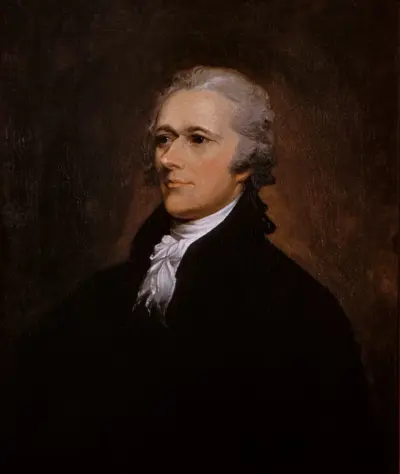
Alexander Hamilton was an American statesman, politician, legal scholar, military commander, lawyer, banker, and economist. He was one of the Founding Fathers of the United States. He was an influential interpreter and promoter of the U.S. Constitution, as well as the founder of the nation's financial system, the Federalist Party, the United States Coast Guard, and the New York Post newspaper. As the first secretary of the treasury, Hamilton was the main author of the economic policies of George Washington's administration. He took the lead in the federal government's funding of the states' debts, as well as establishing the nation's first two de facto central banks, the Bank of North America and the First Bank of the United States, a system of tariffs, and friendly trade relations with Britain. His vision included a strong central government led by a vigorous executive branch, a strong commercial economy, government-controlled banks, support for manufacturing, and a strong military.
