Sabine Baring-Gould Quotes
The Devonian and Cornishman will be found by the visitor to be courteous and hospitable. There is no roughness of manner where unspoiled by periodic influx of strangers; he is kindly, tender-hearted, and somewhat suspicious.
Baring-Gould, Sabine. A Book of the West: Being an Introduction to Devon and Cornwall, Volume I: Devon. Methuen & Co., 1899, p. 3.


1st Earl of Kingston. In 1848, there were a number of democratic revolutions in Europe. In France, however, there was a Military Coup led by Louis Napoleon (Napoleon BonaparteII) who was then declared “President.” The French King and Queen escaped and went to England. The new Louis Napoleon French government charged that if the English would provide asylum to the French Royal Family, England would be interfering in the internal affairs of France by supporting the Royal Family in their presumed efforts to regain the crown. At the same time, there were many Englishmen who wanted nothing to do with the French King as France had been England’s traditional enemy. None the less, the Prime Minister maintained and strengthened the English principle and tradition of tolerance and asylum for a wide variety of political opinion. Over the years many people, great and not; right, left, and center, popular and unpopular, had found sanctuary in England. This tradition was picked up by America which even eclipsed England in being the great political asylum to the world.
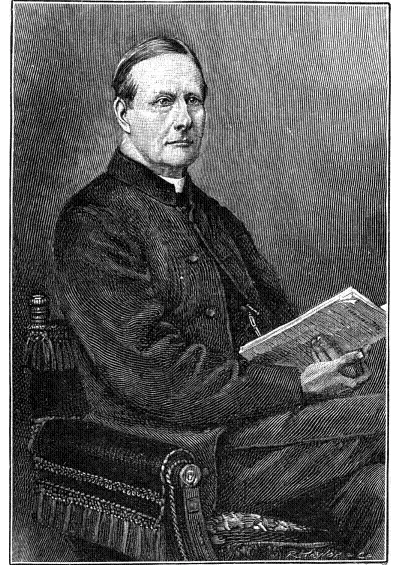
The Reverend Sabine Baring-Gould of Lew Trenchard in Devon, England, was an Anglican priest, hagiographer, antiquarian, novelist, folk song collector and eclectic scholar. His bibliography consists of more than 1,240 publications, though this list continues to grow. His family home, the manor house of Lew Trenchard, near Okehampton, Devon, has been preserved as he had it rebuilt and is now a hotel. He is remembered particularly as a writer of hymns, the best-known being "Onward, Christian Soldiers", "Sing Lullaby", and "Now the Day Is Over". He also translated the carol "Gabriel's Message" from the Basque language to English.
